Why a Classic Outfit Needs One Modern Shoe
Quick Answer: Classic pieces carry no date on their own — a trench, a white shirt, straight trousers, a camel coat have all looked the same for decades. That is exactly the problem: without one contemporary element, the eye assigns the outfit to the era it most resembles, which is usually not now. The shoe is the cheapest and most effective place to put that element, because footwear silhouettes change faster than any other category.
You put together an outfit made entirely of good, permanent pieces. It fits. The colors are right. It still looks like a photograph from 1997.
Nothing is wrong with the clothes. Something is missing, and it is almost always at the bottom.
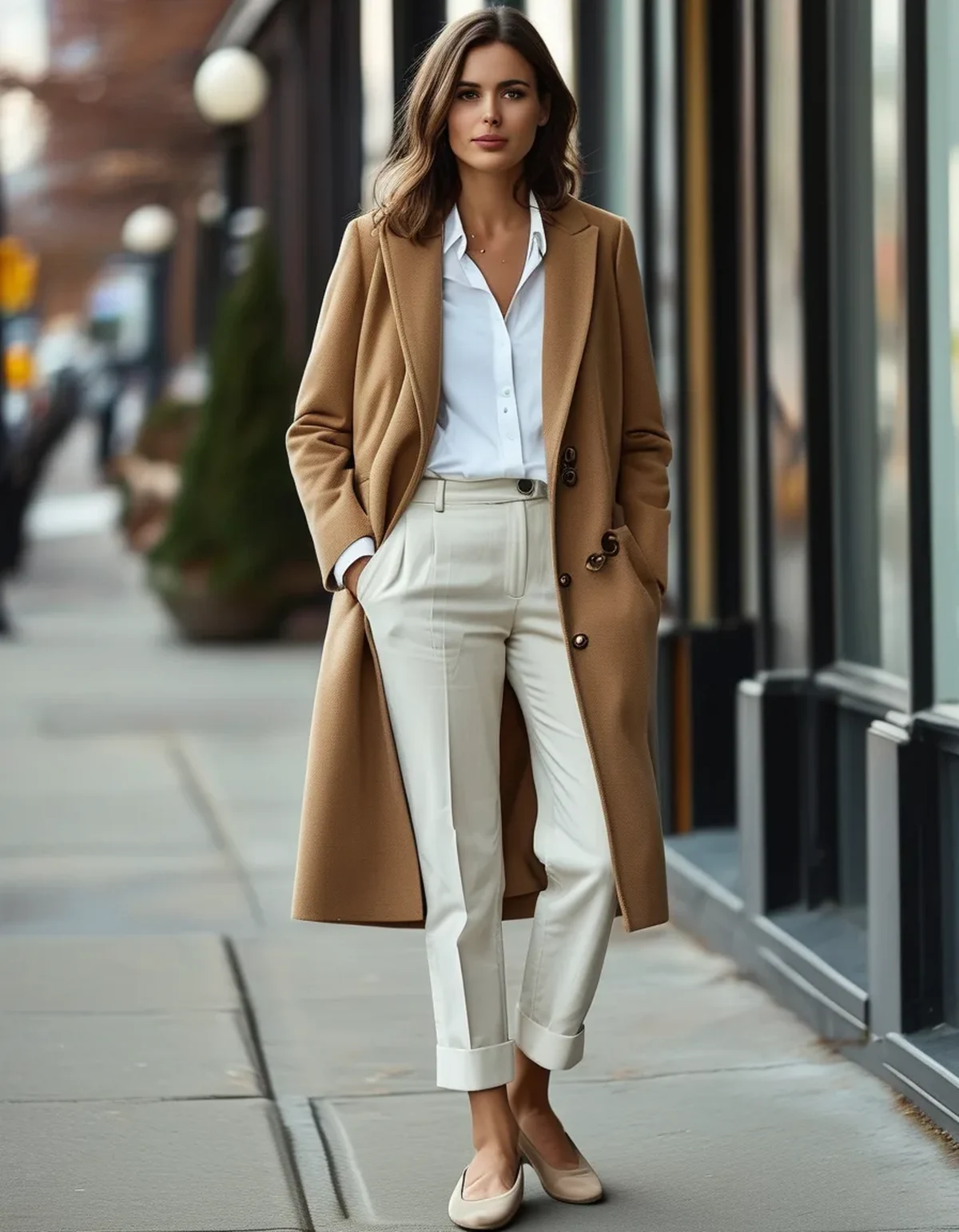
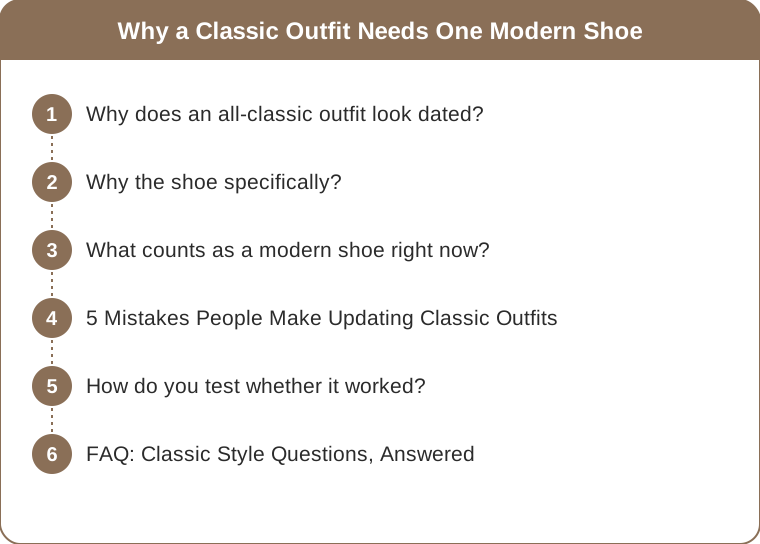
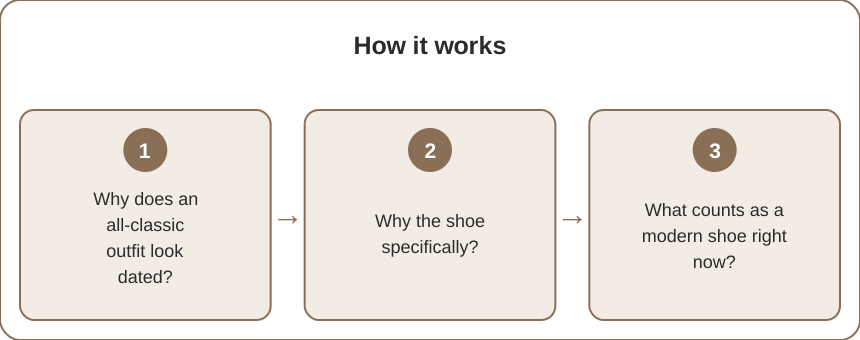
Why does an all-classic outfit look dated?
Because classic pieces are era-neutral individually and era-specific in combination.
A white shirt has no date. Straight-leg navy trousers have no date. A camel coat has no date. But your eye has seen those three together in a particular set of decades, styled with a particular set of shoes, and it fills in the missing information automatically.
This is the same mechanism that makes a period film convincing. Costume designers rarely use unusual clothing — they use ordinary clothing with period-correct proportions and footwear, and that is enough to place a scene in a year.
So when everything you are wearing is neutral, the styling details become the only date stamp available. If those are also neutral, your eye defaults to the past.
Why the shoe specifically?
Three reasons, and they stack.
Shoes change fastest. Toe shape, heel height, sole thickness, and strap placement move on a cycle of a few years. A shoe from six years ago reads clearly older than a coat from six years ago.
Shoes are visually isolated. They sit at the bottom of the outfit with nothing around them, so a contemporary shape registers immediately without disrupting anything above it.
Shoes are reversible. You are not committing the outfit to a trend — you are dating it. Change the shoe next year and the same coat and trousers are current again.
The alternative is putting the modern element in the clothing itself, which means buying trend pieces that expire. The shoe carries the trend so the clothes do not have to.
What counts as a modern shoe right now?
Rather than naming specific styles that will move, look for the qualities that currently read as contemporary:
A defined toe shape. Square, softly squared, or a clean almond. A generic rounded toe with no point of view is the shape that reads dated fastest.
A visible, deliberate sole. Either genuinely slim and flat, or clearly lugged and substantial. The in-between — a medium, unremarkable sole — is what looks like nothing.
One clear design decision. A distinct strap placement, an unusual heel shape, an unexpected material or a strong color. A shoe that is entirely inoffensive contributes nothing.
Proportion that answers your hem. As trousers have gotten wider and longer, shoes have gotten flatter and more substantial to hold the line. A narrow, delicate shoe under a wide trouser reads mismatched in a way it did not when trousers were slim.
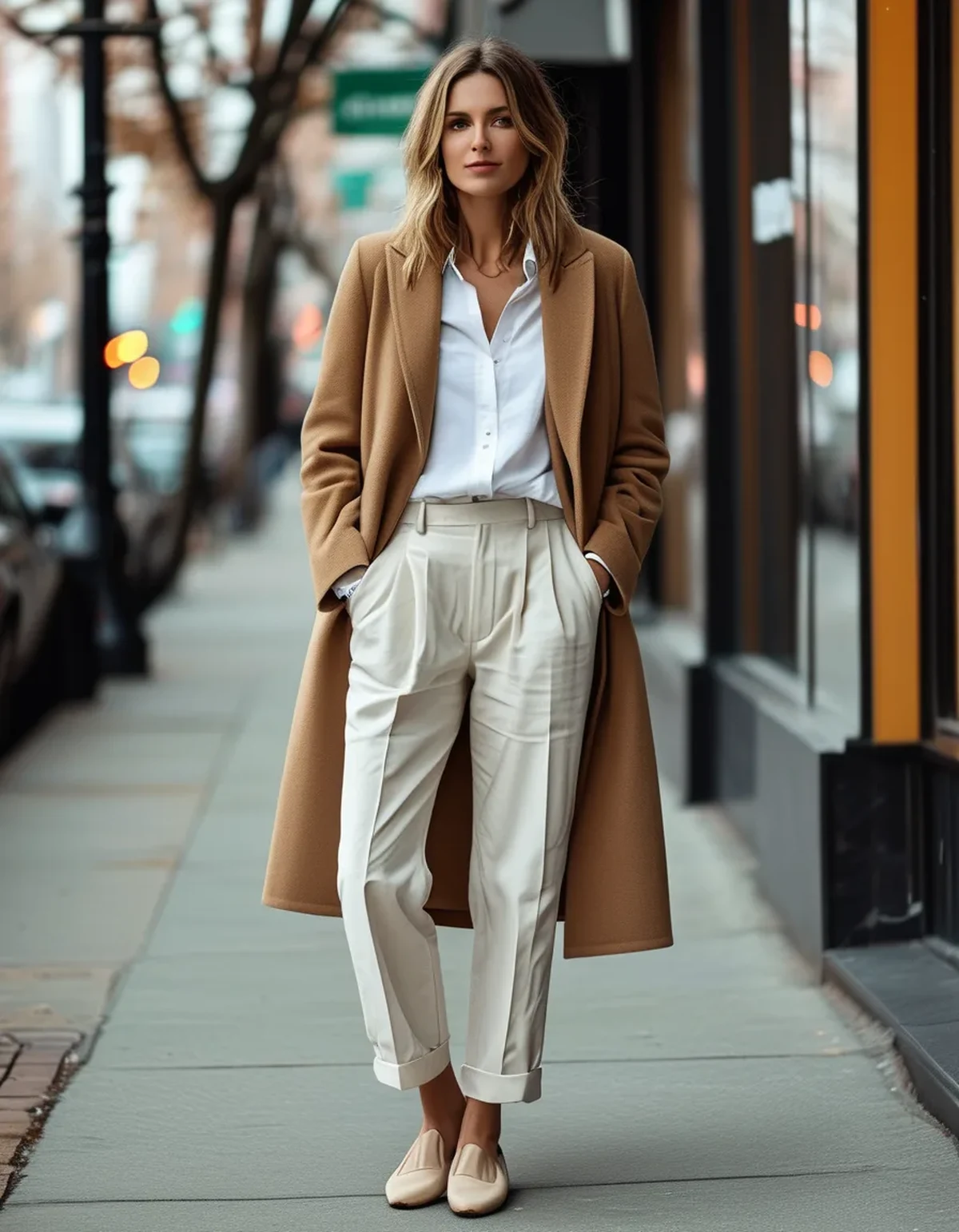
5 Mistakes People Make Updating Classic Outfits
1. Updating the wrong item. Buying a trendy top to modernize a classic outfit means the top is out in two years and you have changed the part of the outfit you liked.
2. Adding more than one modern element. A current shoe plus a current bag plus a current sunglass shape is no longer a classic outfit with an update — it is a trend outfit wearing a trench.
3. Treating a plain black pump as neutral. It is not neutral; it is a specific silhouette with a specific era attached. The toe shape and heel are doing loud dating work you may not want.
4. Keeping a shoe because it still looks new. Shoes are the one category where condition and currency are unrelated. A pristine shoe from 2013 dates an outfit exactly as much as a worn one — this is the one that catches people who take good care of their things.
5. Ignoring the sock and hem gap. The three inches between hem and shoe changes as much as the shoe itself. A visible sock, a bare ankle, or a fully covered instep are three completely different signals.
How do you test whether it worked?
Photograph the full outfit from about eight feet away. Not a mirror selfie — the distortion at arm’s length hides exactly the proportion issues you are checking for.
Cover the shoes with your thumb. If the outfit above the ankle looks the same with and without the shoe visible, the shoe is not doing its job.
Ask what decade it reads as. Be honest and specific. If the answer is a decade rather than “now,” the missing element is still missing.
Check the hem-to-shoe relationship last. A great modern shoe under a hem that is two inches too long is invisible. Length is free to change and fixes more than a new purchase would.
FAQ: Classic Style Questions, Answered
Does this mean I have to follow shoe trends?
Not follow — sample. One current pair every couple of years, worn with everything, is enough. You are timestamping, not chasing.
Can the bag do this job instead?
It can, but bag silhouettes move more slowly and a bag is a bigger purchase. The shoe gives you more effect for less money and less commitment.
What if I only wear flats?
Flats have as much silhouette variation as heels — toe shape, sole thickness, vamp height, and strap placement all shift. A flat is not automatically neutral, which is good news here.
TL;DR:
- Classic pieces are era-neutral alone and era-specific together. Without a current element, your eye assigns them to the past.
- The shoe is the best place for that element — footwear changes fastest, sits visually isolated, and is easy to swap.
- Look for a defined toe, a deliberate sole, and one clear design decision. Avoid the inoffensive middle.
- One modern element, not three. More than that and it stops being a classic outfit.
Try it with the outfit you already trust most. Same coat, same trousers, different shoe — and see how much of what you thought was a clothing problem was a footwear problem.
Keep Reading
This article is for general styling and informational purposes only. Trends, sizing, availability and pricing may vary by brand and season.