Why Classic Pieces Suddenly Look Dated — and It Is Not the Piece
Quick Answer: Classic pieces do not date. Proportion dates. A blazer from 2012 looks old because the shoulder is narrow, the sleeve is slim, and it is worn with a skinny pant — three proportion choices, none of which are the blazer itself. Change the pant width and the sleeve length and the same jacket reads current. Before you replace a classic, change everything around it and look again.
You pull out the camel coat you have loved for 8 years and something is wrong with it. It fits. The fabric is fine. It just looks like a photograph of a different decade.
The coat is almost never the problem. Here is what actually shifted.
What exactly is proportion, in practical terms?
Three measurements, and you can see all of them from across a room:
Shoulder width — where the seam sits relative to your actual shoulder point. A seam sitting exactly on the bone reads structured and traditional. A seam an inch or two past it reads relaxed and current-leaning.
Leg width at the hem — a straight-leg trouser hem runs roughly 16 to 18 inches around, a wide leg runs 20 to 24, and a skinny runs 12 to 14. That single number carries more era information than any other thing you are wearing.
Rise and waist placement — where the horizontal line across your body falls. High-waist at the natural waist versus low-waist at the hip changes the read of an entire outfit without touching the top half.
A classic piece is a shape. Proportion is the scale you build around that shape, and scale is what moves.
How do you tell if the piece or the proportion is the problem?
Run this test, which costs you nothing:
Put on the piece that feels dated. Then change only the item on the opposite half of your body — trade the skinny jean for a wide-leg trouser, or the slim trouser for something fuller. Keep everything else identical. Look again.
If the piece suddenly looks fine, the piece was never the problem.
If it still looks off, check the second variable: sleeve and hem length. Push the sleeve past the elbow, or cuff the trouser to show an ankle. These two changes account for most of the remaining cases.
Only after both tests fail is it worth asking whether the garment itself has a dated detail — a very narrow lapel, a heavy shoulder pad, an exaggerated peplum. Those exist, but they are rarer than people assume.
Which classics are most vulnerable to this?
The ones with the most structure, because structure holds a specific decade in place.
Blazers are the most vulnerable. Shoulder construction changed noticeably between 2010 and now — narrower and more padded then, softer and slightly extended now. A blazer with a hard, narrow shoulder will read old no matter what you pair it with, and this is one of the genuine exceptions where the piece is at fault.
Trousers are second, for the obvious reason that hem width is the loudest era signal in a wardrobe.
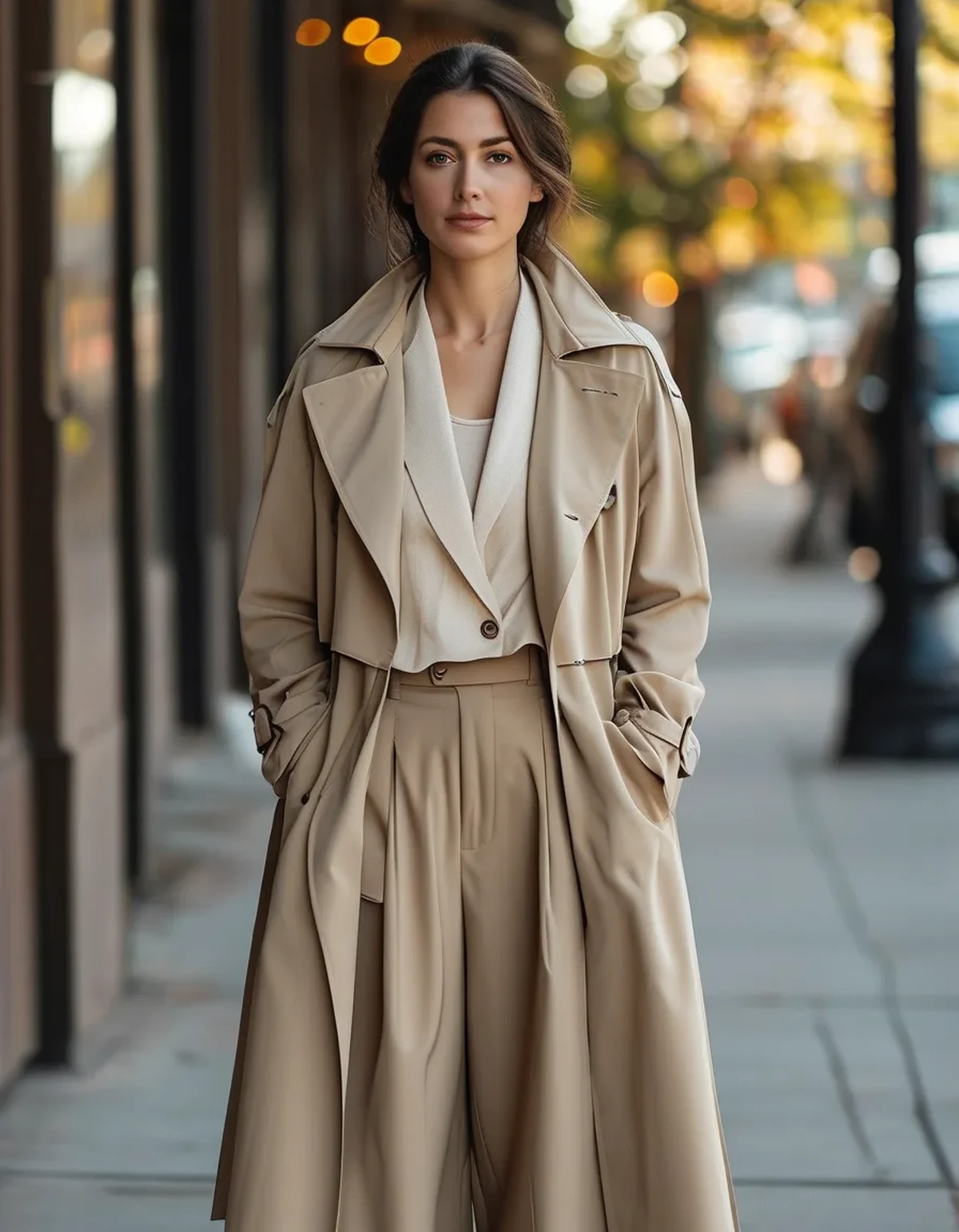
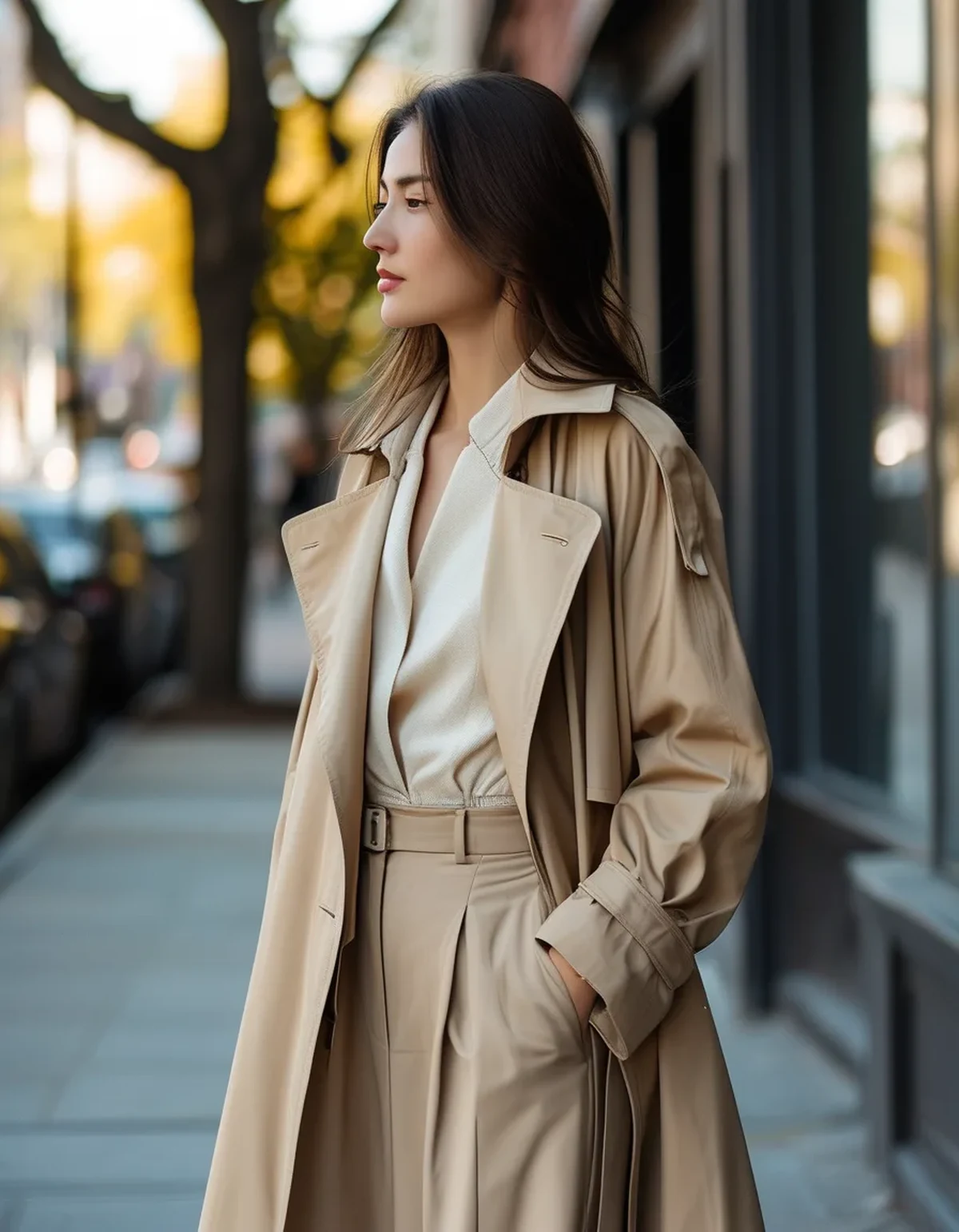
Coats, knitwear, white shirts, and denim jackets are remarkably resilient. A good trench from 2008 will look current with a wide trouser underneath. A crewneck sweater has essentially no era signal at all.
The practical takeaway: spend on outerwear and knitwear, be more careful with blazers and pants, because those are the two categories where you are buying a proportion as much as a garment.
Myth vs Fact: Timeless Clothing
Myth: Buying classic pieces means you never have to update anything. Fact: Classic pieces buy you a much longer runway, not a permanent one. You update the proportion around them roughly every 5 to 8 years, usually by replacing one or two pants.
Myth: If it is expensive and well made, it will always look right. Fact: Quality determines how long a garment physically lasts. It has nothing to do with whether the silhouette reads current. Those are separate axes and conflating them is why people own beautiful clothes they never wear.
Myth: Trends and classics are opposites. Fact: Every classic was contemporary once, and the current version of a classic quietly absorbs the proportion of its moment. Today’s straight-leg is roughly an inch wider than 2015’s straight-leg. Nobody announced it.
Myth: You can tell a dated outfit by the pieces in it. Fact: In most photographs you are reading the silhouette, which your eye processes before it identifies any single garment. That is why a dated outfit can be made entirely of things you would call timeless individually.
What should you actually change this fall?
If you want the highest return on the fewest purchases:
One trouser. A wide or relaxed straight leg in a fall-weight fabric will refresh every top and jacket you own. This is the single most leveraged item in a classic wardrobe.
One sleeve habit. Push knitwear sleeves past the elbow instead of leaving them at the wrist. Free, and it changes the read of every sweater in the drawer.
One shoe volume. Heavier shoes — a loafer with a real sole, a boot with some weight — balance a wider trouser. A delicate pointed flat under a wide leg is the mismatch that makes new pants look wrong and sends people back to the old ones.
That is three changes, one of which costs money. Do those before you consider replacing a single classic piece.
FAQ: Classic Wardrobe Questions, Answered
How often does proportion actually shift?
Meaningfully, about every 5 to 8 years. Small drifts happen constantly, but the noticeable jumps — skinny to wide, low rise to high rise — cluster.
Should I get rid of my skinny jeans?
Not on principle. Keep one pair for tucking into tall boots, where the narrow leg is functional. Just stop using them as your default.
Can a tailor update proportion?
Partly. Taking in or letting out a leg width and shortening a hem are routine. Rebuilding a shoulder is expensive enough that it rarely makes sense outside of a genuinely valuable coat.
TL;DR:
- Classic pieces do not date — the shoulder width, hem width, and waist placement around them do.
- Test before replacing: change the item on the opposite half of your body and look again.
- Blazers and trousers carry the most era information; coats, knitwear, and shirts are far more durable.
- The cheapest fall update is one wider trouser, one pushed sleeve, and one heavier shoe.
Before you donate the coat, spend 10 minutes trying it over three different bottoms. Most of the time the coat gets to stay.
Keep Reading
This article is for general styling and informational purposes only. Trends, sizing, availability and pricing may vary by brand and season.