Why Classic Pieces Look Wrong in Summer and It Is Not the Cut
Quick Answer: Classic pieces fail in heat because they are almost always cut in fabric weights designed for cool weather. A wool blazer, a cotton gabardine trench, and a thick poplin shirt are all correct garments in the wrong cloth. Look for unlined construction, open weaves, and weights under about 250gsm — the cut stays classic and only the fabric changes. Half-lined and unstructured tailoring is the single most useful category here.
The blazer that looks perfect in October looks strained in August. Same blazer, same fit, same you.
What changed is that a garment engineered to hold shape in cool air is now holding heat, and every classic in your wardrobe has a summer-weight twin that almost nobody buys.
What actually goes wrong?
Three things, all of them about weight and construction rather than design.
1. Lining. A fully lined jacket has an extra impermeable layer against your body. Lining is what makes a blazer wearable in November and unwearable in August, and it is the single biggest variable.
Unlined and half-lined tailoring exists and is beautifully made. It is simply less common on a rail because it is a seasonal item that shops carry for a short window.
2. Fabric weight. Measured in grams per square metre. A winter suiting wool runs 280 to 350gsm; a summer one runs 180 to 240. The difference is visible in how the garment falls and immediately obvious in how it feels.
3. Weave density. An open weave lets air through. Fresco wool, hopsack, linen, and cotton voile are all open weaves designed for exactly this, and they are what tailors have used for hot climates for a century.
The result of getting it wrong: the garment looks heavy in bright light, sits stiffly, and shows perspiration through. None of that is the cut’s fault, which is why buying a different silhouette does not fix it.
What does each classic look like in summer weight?
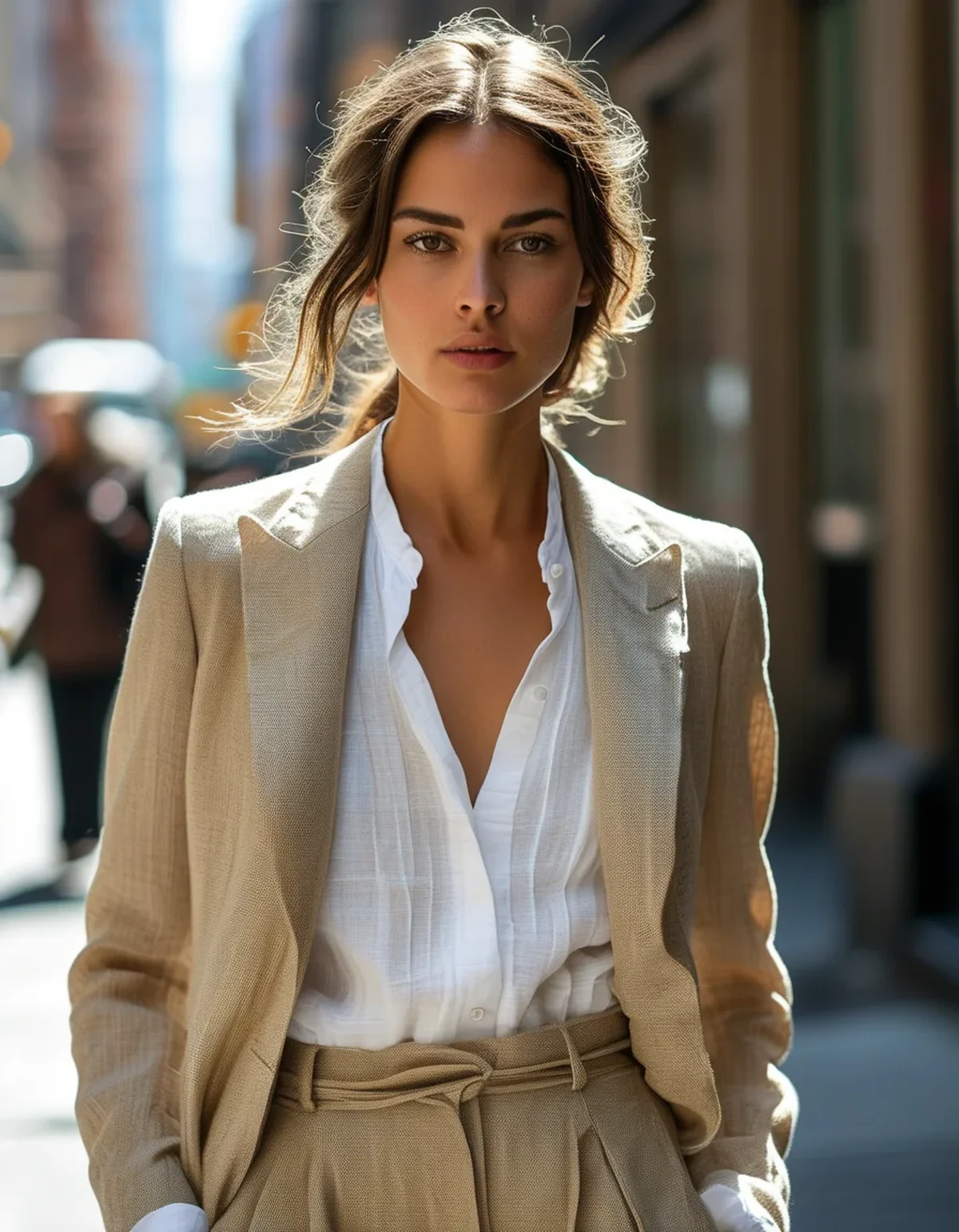
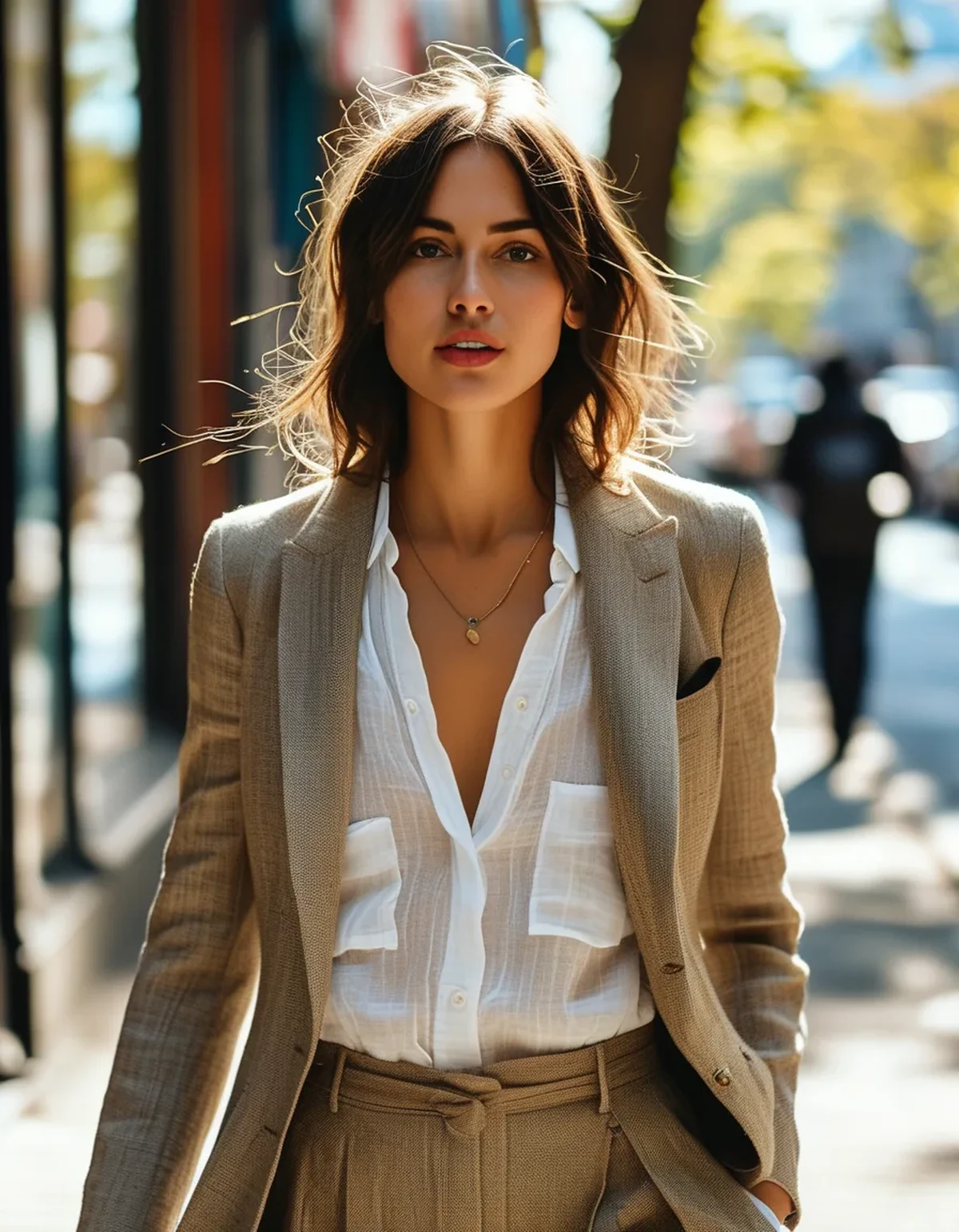
The blazer. Unlined or half-lined, in linen, hopsack, or fresco wool. No shoulder padding to speak of, and a softer construction. It will crease more and it will be wearable, which is the trade worth making.
The trench. The traditional cotton gabardine trench is genuinely warm. A summer version is unlined, in a lighter cotton or a technical blend, and works as a rain layer rather than as a warmth layer.
The white shirt. Thick poplin is opaque and warm. Cotton voile, lawn, or a fine linen gives the same crispness with airflow. Opacity is the thing to check, and a shell underneath solves it.
The tailored trouser. Tropical-weight wool is the answer most people never consider — it breathes better than cotton chino and holds a press far better than linen. It is the most under-appreciated summer trouser in existence.
The little black dress. In heavy crepe it is stifling. In a fine wool, a silk-viscose, or a good cotton it works all summer and reads exactly as classic.
The knit. A fine merino or a cotton-silk blend rather than lambswool. Merino in a light weight is genuinely comfortable in heat, which contradicts everything people assume about wool.
The common thread: in every case the silhouette is unchanged. Only the cloth moved, and that is what the whole category comes down to.
Myth vs Fact: Classic Pieces in Heat
Myth: Wool is a winter fiber. Fact: Tropical-weight wool is among the best hot-weather fabrics available. It breathes, it regulates temperature, it resists wrinkles, and it does not cling. Wool suiting for hot climates is a long-established tradition, not a novelty.
Myth: Cotton is always cooler than wool. Fact: Heavy cotton twill is warmer than lightweight wool. Weight and weave beat fiber every time, and dense cotton holds moisture against the skin where wool moves it away.
Myth: Linen is unprofessional because it wrinkles. Fact: In warm climates, a linen jacket is standard professional dress. Creasing is the fabric’s nature and it is read as such by anyone familiar with it.
Myth: An unstructured blazer looks sloppy. Fact: Soft tailoring is a deliberate tradition with its own precision. It looks relaxed rather than unfinished, and the difference is in the cut and the cloth.
Myth: You need a separate summer wardrobe of classics. Fact: Two or three summer-weight versions of the pieces you actually wear covers it. The blazer, the trouser, and the shirt are the three that matter.
How do I shop for weight instead of for style?
Look for the word unlined or half-lined in the description. More brands list it now, and it is the fastest filter available.
Hold the garment up to a light. An open weave shows visible light through the structure of the cloth. This is a good sign in summer tailoring, not a defect.
Check gsm if it is published. Under 250gsm for a jacket or trouser is summer territory. Over 280 is cool weather regardless of what season the shop is selling it in.
Feel the weight in your hand rather than the softness. Softness is a finish. Weight is structural and it tells you what the garment will do at noon.
Check the sleeve lining specifically. Many half-lined jackets keep a lined sleeve for ease of wearing. This is a good compromise and worth knowing about.
Buy at the end of the season. Summer-weight classics go on sale in late summer and are useful for years. This is the single most efficient buying window for the category, and it is happening right now.
FAQ: Summer Classic Wardrobe Questions, Answered
Is an unlined blazer worth buying if I already own a lined one?
If you wear a blazer in warm weather at all, yes. They are functionally different garments and the lined one simply will not be worn for several months of the year.
What is the single best summer-weight classic to own?
A tropical-weight wool trouser. It outperforms cotton chino on breathability, holds a press, resists wrinkles, and works in far more of the year than either extreme.
Does linen have to be pure to be good?
No. Linen-cotton and linen-viscose blends breathe nearly as well and crease considerably less. Pure linen is the purist’s choice and the blend is often the more wearable one.
How do I keep a white summer shirt from being see-through?
Check opacity in daylight before buying, and layer a fine shell or a seamless camisole underneath. A slightly heavier voile is often more opaque than a thin poplin despite feeling lighter.
TL;DR: Right garment, wrong cloth. That is the whole diagnosis.
- Lining is the biggest variable. Unlined or half-lined tailoring is the category to look for.
- Under 250gsm is summer weight; over 280 is cool weather whatever the shop calls it.
- Open weaves — linen, hopsack, fresco — are built for this and have been for a century.
- Tropical-weight wool is the best summer trouser and almost nobody considers it.
- Weight and weave beat fiber. Heavy cotton is warmer than light wool, every time.
- Buy at end of season. Summer-weight classics discount now and stay useful for years.
Hold your favorite blazer up to a window. If no light passes through the cloth, you have found why it does not work in August.
Keep Reading
This article is for general styling and informational purposes only. Trends, sizing, availability and pricing may vary by brand and season.