Classic Pieces With an Unexpected Twist
Quick Answer: Twist a classic by changing exactly one thing — the proportion, the colour, one styling choice, or the texture it’s paired with. A trench, blazer or white shirt with a single unexpected element reads as considered and current. Two twists reads as styled; four reads as chaos. One is the number.
A trench, a white shirt, a good blazer. They’ll never let you down, which is precisely the problem — after a while, “never lets you down” starts to feel a lot like “predictable.”
The women whose classics never look boring aren’t wearing different clothes than you. They’re wearing the same trench with one thing deliberately off — the colour, the proportion, the way it’s fastened — and that single decision is doing all the work.
How Do You Make Classic Pieces Look Less Boring?
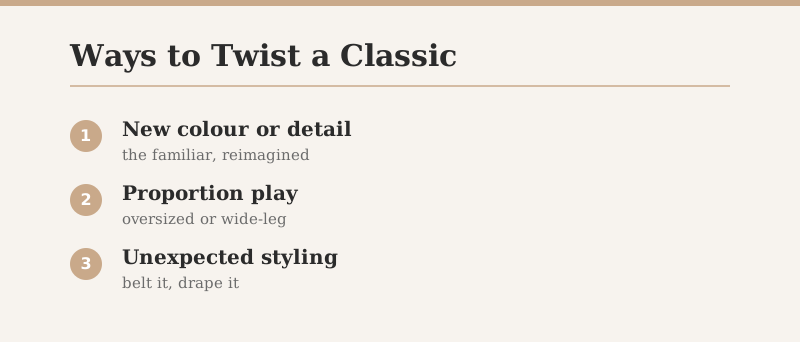
Change one variable. That’s genuinely the entire method, and there are four variables to choose from.
1. The version of the garment. Buy the classic, but not the default one. A trench in butter yellow or olive instead of stone. A blazer with a sculptural, slightly exaggerated shoulder. A white shirt with an oversized collar or a curved hem. You keep every bit of the timeless appeal and skip the version everyone else owns.
2. The proportion. The easiest twist available, and it costs nothing if you already own the pieces. An oversized blazer over slim trousers. Wide-leg tailoring with a fitted knit. A voluminous shirt tucked into a narrow skirt. Same wardrobe, entirely different silhouette — and volume contrast is what makes an outfit read as intentional rather than default.
3. The styling. Sometimes the garment doesn’t change at all. A blazer belted and worn as a dress. A shirt off one shoulder, or buttoned at the back. Pearls layered over a chunky chain. Cuffs pushed up to the elbow. This costs nothing but a small amount of nerve.
4. The pairing. Put the classic next to something with a completely different attitude. A tailored blazer over leather trousers. A silk blouse with raw, stiff denim. A ladylike wool coat with chunky lug-sole boots. The tension between formal and rough is what reads as modern.
Which Classics Take a Twist Best?
Not all of them respond equally. These four are the most forgiving places to start:
- The blazer. The most versatile canvas in your wardrobe. Oversize it, belt it, wear it as a dress, throw it over a slip. Almost nothing you do to a blazer looks wrong.
- The white shirt. Collar variations, sleeve volume, the way you fasten it. Try buttoning it one button lower and pushing the cuffs to the elbow — a five-second twist.
- The trench. Colour is the highest-impact change here. The belt is the second: knotted rather than buckled, or tied at the back.
- Straight-leg jeans. Change what’s on your feet and the entire register shifts — loafers read preppy, chunky boots read tough, a slingback reads polished.
The ones to leave alone: a genuinely great coat, a perfectly fitted little black dress. Some pieces are doing their best work played completely straight.
Myth vs Fact
Myth: Twisting a classic means ruining it. Fact: You’re not altering the garment — you’re changing its context. The trench is still a trench on the days you want it played straight.
Myth: You need new pieces to do this. Fact: Proportion and styling twists use what you already own. Belting a blazer costs nothing; so does rolling a cuff or swapping the shoes.
Myth: More twists means more style. Fact: This is the one that actually goes wrong. One surprising element in an otherwise classic outfit reads as deliberate. Three or four reads as someone who got dressed in the dark.
Myth: Only tall or slim people can do oversized proportions. Fact: Volume works on everyone — the trick is contrast. Oversized on top wants something narrow on the bottom, and vice versa. Oversized everywhere is what swamps a frame, at any height.
The Rule That Makes It Work
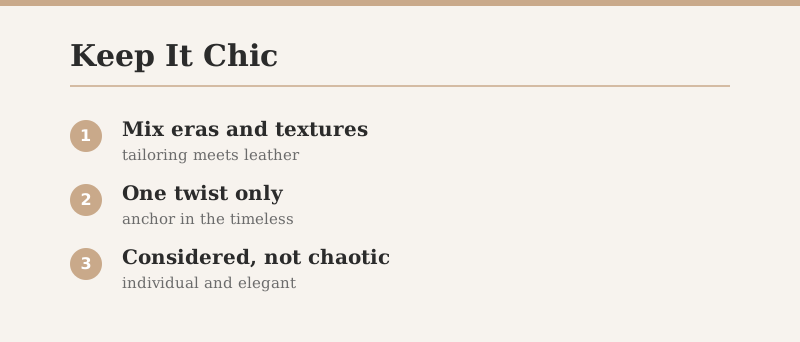
Twist one element. Anchor everything else.
That’s the whole balance. A classic outfit with a single unexpected detail reads as considered, current, and slightly more interesting than the room expects. A classic outfit with five unexpected details reads as effort — and visible effort is the one thing that reliably undoes the effect.
Practically: get dressed in your reliable classic outfit first, then change exactly one thing before you leave. Swap the shoes, belt the jacket, push the sleeves up, or reach for the olive trench instead of the beige one.
One decision. Every single time.

Mini FAQ
What’s the easiest way to modernise a classic outfit?
Change the proportion or the shoes — both are free if you already own the pieces. An oversized blazer with slim trousers, or straight-leg jeans with a chunky loafer instead of a delicate flat, updates a look instantly without buying anything.
How do I know if a twist is too much?
If you’re checking the mirror repeatedly on the way out, it’s probably one twist too many. The reliable test is counting: how many elements of this outfit are unexpected? If the answer is more than one, take something back to the classic version.
Should I buy classic pieces in unusual colours?
For second and third versions, yes — but own the neutral one first. A stone trench works with everything and earns its keep; an olive or butter-yellow one is the twist, and it’s a much better purchase once you’ve got the reliable version hanging next to it.
TL;DR
- Change exactly one variable: the version, the proportion, the styling, or the pairing.
- Proportion contrast is the easiest twist and costs nothing.
- Blazers, white shirts, trenches and straight-leg jeans take twists best.
- Volume works at any height — just contrast it with something narrow.
- One twist reads as considered; three reads as chaos.
- Get dressed in the classic version, then change one thing before you leave.
Classics never have to be boring. They just need one deliberate decision that says you chose this.
Keep Reading
This article is for general styling and informational purposes only. Trends, sizing, availability and pricing may vary by brand and season.