The Two Lengths That Quietly Date a Classic Piece
Quick Answer: Classic garments date at two points: sleeve length and hem length. Both are cheap to alter and both are almost always what makes an otherwise timeless piece read as old. Blazer sleeves should end at the wrist bone showing a half inch of shirt cuff; trouser hems should break lightly on the shoe. Get those two right and a fifteen-year-old blazer reads current. Get them wrong and a new one does not.
The blazer is navy, single-breasted, and beautifully made. It should be immortal.
Instead it looks like it belongs to a different decade, and the reason is two inches of fabric in two places — both of which a tailor can fix for less than the cost of dinner.

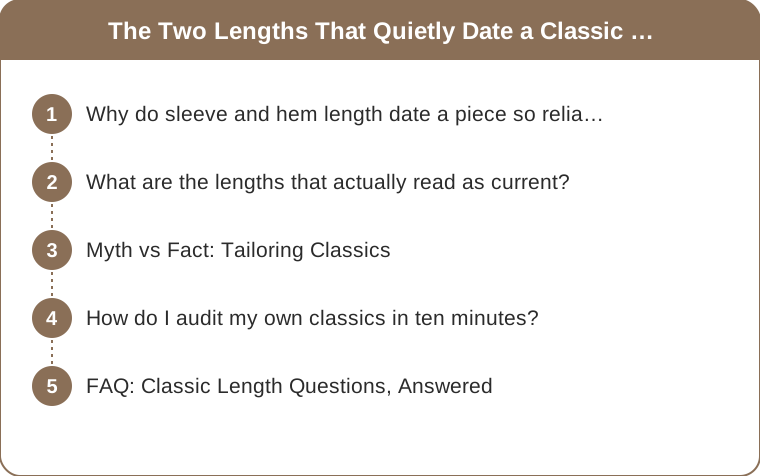
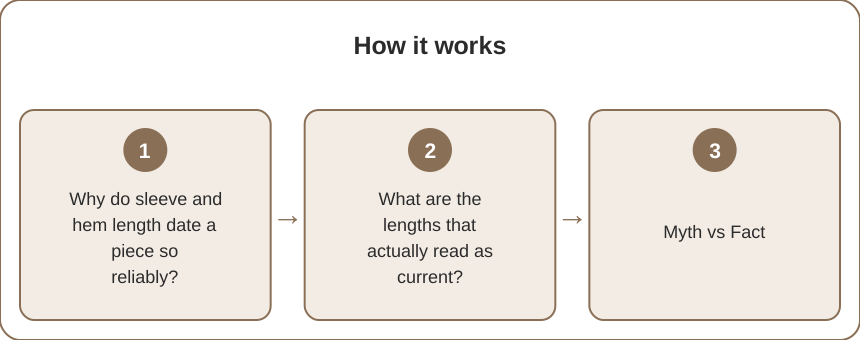
Why do sleeve and hem length date a piece so reliably?
Because they are the two points where a garment meets a visible landmark on the body, and the eye is extremely good at judging proportion against a known reference.
A sleeve ends against the wrist and hand, the most-observed part of the body in conversation. A hem ends against the shoe and the floor. Both give the eye something absolute to measure against, which is why an error of an inch registers instantly while a half-inch difference in lapel width does not.
They also date because they are the elements that actually move with fashion cycles. Lapel width, button stance, and pocket style shift slowly and subtly. Sleeve and hem length have swung dramatically within living memory — long-and-covering to short-and-cropped and partway back.
And they are what alterations were historically applied to. A blazer bought in 2011 was very likely shortened at the sleeve to match that moment. The garment carries the date of its last alteration, not its manufacture.
One more reason nobody mentions: both lengths change with your body and your shoes. A trouser hemmed for a heel is wrong on a flat, and most people hem once and then change what they wear on their feet.
What are the lengths that actually read as current?
Blazer and jacket sleeve: end at the wrist bone, with a half inch of shirt cuff showing when worn over a shirt. Without a shirt underneath, the sleeve should just cover the wrist bone. Anything ending above the wrist bone reads either deliberately cropped — a specific look that dates quickly — or accidentally short.
Long sleeve top or knit: to the base of the thumb, or just past the wrist. A knit sleeve ending mid-wrist is the most common quiet dating error in a wardrobe and is nearly always shrinkage rather than design.
Trouser hem: a light break on the shoe for a straight or wide leg. For a cropped or tapered trouser, the hem should sit at or just above the ankle bone. The dated version is the one that lands in the middle of the ankle with no clear intent.
Skirt and dress hem: the reliable lengths are just above the knee, just below the knee, and mid-calf. The lengths that date are the ones that land right at the kneecap or at the widest point of the calf.
Coat hem: should fall below the hem of whatever is worn underneath. A coat that ends within two inches of a dress hem is the most visible proportional error in outerwear and it is entirely a length problem.
The single principle underneath all of it: land at a joint or clearly past it, never in the middle of a muscle. Wrist bone, ankle bone, above or below the knee. Middles are what look uncertain.

Myth vs Fact: Tailoring Classics
Myth: A classic piece never needs altering. Fact: Classic construction is what makes a piece worth altering. Good cloth and real seam allowance are exactly what a tailor needs to work with, and mediocre garments are the ones not worth the fee.
Myth: Sleeve shortening is expensive on a jacket. Fact: It is one of the most common alterations there is, and on a jacket without functioning buttonholes it is straightforward. Working buttonholes make it more involved, so ask before you buy.
Myth: You should hem trousers to the shoes you wear most. Fact: Hem them to the heel height you will wear them with, which is not always the same thing. If you own the trouser for both, hem to the lower heel — slightly short reads intentional and slightly long reads sloppy.
Myth: Cropped is a modern look and long is dated. Fact: Extreme cropping dates faster than anything else in tailoring. The mid-range lengths outlast both ends by a wide margin.
Myth: If it fits in the shoulders, buy it. Fact: True, and that is exactly the point — the shoulder is the one thing that cannot be fixed. Sleeve and hem can. Buy for shoulder and alter the rest.
How do I audit my own classics in ten minutes?
Put on each classic piece with the shoes you actually wear it with. This step is skipped almost universally and it invalidates the whole audit when it is.
Stand normally, arms at your sides, and photograph yourself from the front in daylight. Look at the photo rather than the mirror — the mirror encourages you to look at your face and the photo lets you look at the edges.
Check every terminal point against a joint. Where does the sleeve end relative to the wrist bone? Where does the hem land relative to the ankle bone or the knee? Mark anything that lands in the middle of a muscle.
Make one pile for the tailor. Sleeve shortening, hem adjustment, and taking in a waist are the three highest-value alterations available. Together they cost a fraction of one new garment and improve several.
Reassess anything that shrank. Knit sleeves that now end mid-wrist cannot be lengthened. Those are wear-at-home pieces now, and recognizing that is more useful than continuing to wear them out.
Do this once a year, not once a decade. Bodies change, shoe habits change, and knits shrink continuously. An annual ten-minute pass keeps a classic wardrobe genuinely classic instead of slowly drifting into the year it was last altered.
FAQ: Classic Length Questions, Answered
How much shirt cuff should show under a blazer?
About a half inch. It is a small detail that reads as deliberate tailoring, and it also protects the jacket sleeve from wear at the cuff.
Can a jacket sleeve be lengthened as well as shortened?
Usually by a limited amount, depending on the seam allowance inside the cuff. A good tailor can tell you in thirty seconds — ask before assuming a jacket with short sleeves is unusable.
What hem length is safest for a skirt if I am unsure?
Just below the knee. It works across body types, occasions, and shoe heights, and it has never been out of style in any decade you would want to reference.
Is it worth tailoring inexpensive clothes?
Rarely. The alteration cost is a high proportion of the garment value and the cloth usually will not hold the change well. Spend tailoring money on your best pieces, where it returns the most.
TL;DR: Classics date at the sleeve and the hem, and both are fixable.
- The eye measures terminal points against joints, which is why an inch shows there and nowhere else.
- Blazer sleeve at the wrist bone, half an inch of cuff showing.
- Trouser hem breaks lightly on the shoe, or sits at the ankle bone if cropped.
- Land at a joint or clearly past it. Never in the middle of a muscle.
- A coat must fall below what is worn underneath — the biggest visible proportion error in outerwear.
- Buy for the shoulder, alter everything else. The shoulder is the only thing that cannot be fixed.
Put on your best blazer with the shoes you wear it with and photograph yourself. The two inches you find will cost less to fix than you think.
Keep Reading
This article is for general styling and informational purposes only. Trends, sizing, availability and pricing may vary by brand and season.