How to Tell a Timeless Piece From a Dated One on the Rack
Quick Answer: Timeless pieces are defined by proportions that have stayed in continuous production for decades — a shoulder seam at the shoulder point, a natural waist, a hem at a neutral length, and hardware that is quiet. Dated pieces carry at least one exaggerated proportion, because exaggeration is what a trend is. Run six checks on the rack and you will separate them without needing to know anything about the brand.
A trend is an exaggeration of something. Find the exaggeration and you have found the expiry date.

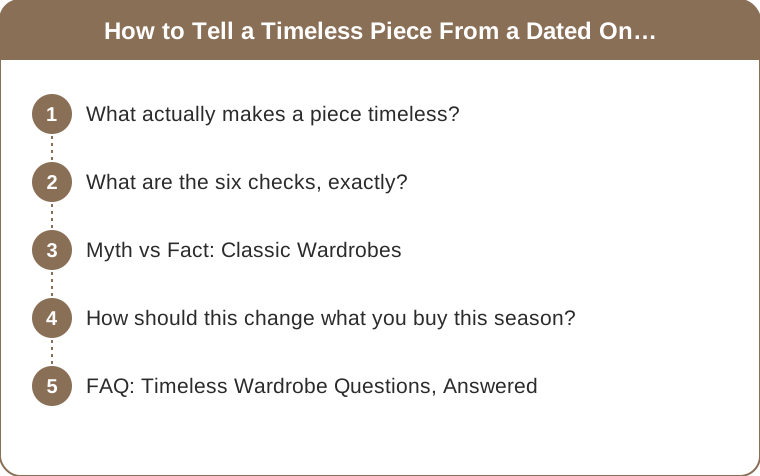
What actually makes a piece timeless?
Continuity of production, and the absence of any single exaggerated dimension.
A classic garment is one that has been made continuously for a long time in roughly the same proportions. A trench coat, a crew neck sweater, a straight leg trouser, a white shirt. These have survived because their proportions are neutral rather than distinctive.
A trend is an exaggeration of one dimension. A very wide shoulder, a very cropped length, a very low rise, a very high slit, a very oversized cuff. The exaggeration is what makes it feel new, and it is also what makes it date, because the next trend exaggerates a different dimension.
This gives you a working rule: find the one thing that is unusually large, small, high, low, or loud. That is the dating element. A piece with none is a classic. A piece with one can still be worth buying, as long as you know that is what you are buying.
Hardware is the second axis. Visible logos, oversized buckles, chunky decorative zips, and contrast stitching all date a piece faster than the cut does, because hardware trends move faster than silhouette trends.
Fabric finish is the third. A high shine synthetic, a heavy coating, or an unusual texture will read as a specific season. A matte natural fiber does not.
And the honest caveat: timeless does not mean better. Some of the most interesting clothes are exaggerated, and a wardrobe of nothing but neutral proportions is a dull one. The point is to know which you are buying so you spend accordingly.
What are the six checks, exactly?
In the order that eliminates the most options fastest.
1. Shoulder seam. On any structured piece, find where the shoulder seam is designed to fall. On the shoulder point is classic. Dropped an inch or more down the arm is a trend. Dropped shoulders have been dominant recently, which means they will read as this period later, and it is the single most reliable date marker on a rack.
2. Waist position. The natural waist is neutral. Very high and very low are both trends. Trousers, skirts, and dresses all carry this, and it is the one that dates fastest because rise trends move in decade cycles.
3. Hem length. Just above the knee, just below the knee, and full length ankle are neutral. Micro lengths and mid calf are period specific. Trousers ending exactly at the ankle bone are neutral; ending at mid calf is a moment.
4. Hardware and logos. Quiet is timeless. Look for tonal buttons, small flat hardware, and no visible branding. Any logo larger than a fingernail assigns the piece to the period the logo was popular.
5. Fabric composition, read on the label. Natural fibers and natural fiber blends age visually better than high synthetic content. Not for ethical reasons, but because synthetics develop shine and pilling that reads as worn out.
6. Color. Navy, black, camel, cream, grey, and true white are permanent. A very specific fashion shade is a season stamp. If you cannot name the color in a common word, it is probably a trend color.
The fastest version of all six: stand ten feet back from the rack and see whether anything about the garment jumps out. If one feature dominates from that distance, it is the trend element.

Myth vs Fact: Classic Wardrobes
Myth: Expensive means timeless. Fact: Price and durability of style are unrelated. Designer collections are more trend driven than mass market basics, and the most exaggerated proportions each season are usually at the highest price points. A well made mid price crew neck outlasts a designer piece with a statement shoulder.
Myth: A classic wardrobe means only neutral colors. Fact: Color has been part of classic dressing forever. What dates is a very specific fashion shade, not color itself. A true red, a navy, a forest green, and a camel are all as permanent as black.
Myth: If you buy classics, you never need to shop. Fact: Classics wear out, and fit changes. The maintenance cost of a classic wardrobe is real — it just goes into replacing the same pieces rather than chasing new ones.
Myth: You can tell a well made garment by the price tag. Fact: You can tell by the seams, the lining, the button attachment, and the fabric weight, all of which are checkable in thirty seconds. Turn the garment inside out at the shoulder seam — finished seams and a clean lining attachment tell you far more than the label.
Myth: Trends should be avoided entirely. Fact: A wardrobe of pure classics reads as costume in its own way. One current element in an otherwise neutral outfit is what makes it read as now rather than as a period piece.
How should this change what you buy this season?
Autumn is the highest stakes buying season, which makes the checks worth more right now.
Autumn is when the expensive purchases happen. Coats, boots, blazers, and knitwear are the highest ticket items in most wardrobes, and they are all bought between now and November. The cost of a dating mistake is highest in exactly this window.
Outerwear should pass all six checks. A coat is the piece you wear most visibly and replace least often, so it is the one place to be strictest. Shoulder seam on the shoulder, neutral length, quiet hardware, natural fiber content, permanent color. A trench, a wool overcoat, and a good navy blazer are the three that never fail.
Knitwear is where the fabric check matters most. A high synthetic content knit pills within a season and then looks cheap regardless of its cut. Check the label for wool, cotton, or cashmere content before you check anything else — a beautiful cut in a poor fiber blend is a one winter garment.
Boots are the fastest dating category of all. Toe shape and shaft height both move in short cycles. A round or almond toe and a shaft that ends just below the calf are the neutral options, and a very square or very pointed toe is a clear period marker.
Buy the trend piece in the cheapest category. If you want the current exaggerated silhouette, take it in a top or an accessory rather than a coat. The rule is to spend where the proportions are neutral and economize where they are not.
Watch for early season markdowns on last year’s neutral pieces. The genuinely classic items get marked down at the same rate as trend pieces, which makes late August and early September an unusually good time to buy a coat that will still work in five years.
And check what you already own before buying anything. Run the six checks on your existing coats and blazers. The ones that fail on shoulder seam or hem length are why your wardrobe feels dated, and identifying them is more useful than adding to the pile.
FAQ: Timeless Wardrobe Questions, Answered
What is the single fastest check?
Shoulder seam position on any structured garment. It should sit on the bony point of the shoulder. A dropped shoulder is the dominant trend silhouette right now, which means it is the clearest date marker, and it takes two seconds to check on a rack.
Are dropped shoulders a mistake to buy?
Not a mistake, and they are a trend rather than a classic. Buy them knowing that, in categories where you replace often — knitwear, casual tops — rather than in a coat you intend to keep for a decade.
How do I judge quality without knowing fabrics?
Turn the garment inside out at a seam. Finished, enclosed seams and evenly attached linings indicate care in construction. Then check the button attachment — buttons sewn with a shank and a reinforced back are on a well made garment; buttons flat against the fabric are not.
Should I avoid all trends?
No. One current element in an otherwise neutral outfit is what stops it reading as a costume from another decade. Take the trend in a cheap category and keep the expensive items neutral.
TL;DR:
- A trend is an exaggeration of one dimension — find the exaggeration and you have found the expiry date.
- Run six rack checks: shoulder seam, waist position, hem length, hardware, fiber content, color.
- Spend where proportions are neutral (coats, boots, blazers) and economize on the trend element.
- Autumn is the highest stakes buying season, so the checks are worth the most right now.
Before you buy a coat this month, stand ten feet back from the rack. If one feature jumps out at that distance, that is the part that dates.
Keep Reading
This article is for general styling and informational purposes only. Trends, sizing, availability and pricing may vary by brand and season.