The Reinvented Trench: Beyond the Classic Beige
The trench coat is a genuine icon — over 100 years of chic and still going strong. But the reinvented trench is where things get properly interesting. Bold colours, unexpected materials, sculptural shapes: today’s trench goes far beyond classic beige while keeping every bit of that timeless elegance.
Quick Answer: A reinvented trench keeps the recognisable trench blueprint — the belt, the lapels, the storm flap, the long lean line — and changes exactly one variable: colour, material, or proportion. Change one and you get a statement coat that still reads as a classic. Change all three at once and you get a costume.
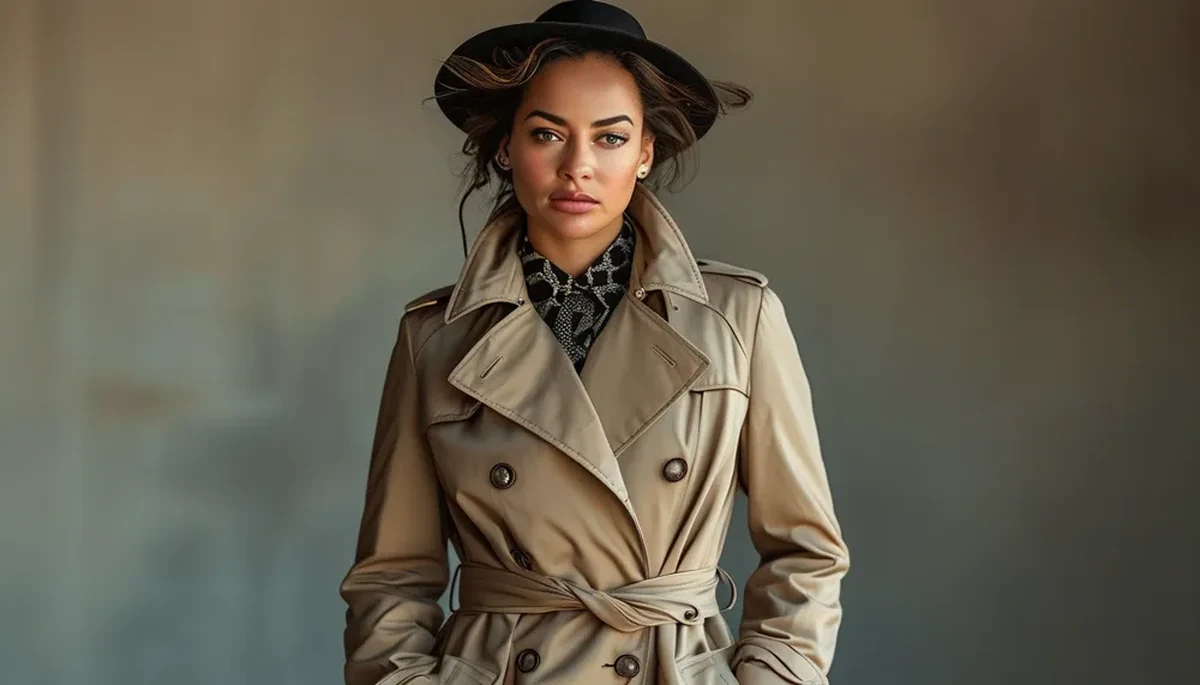
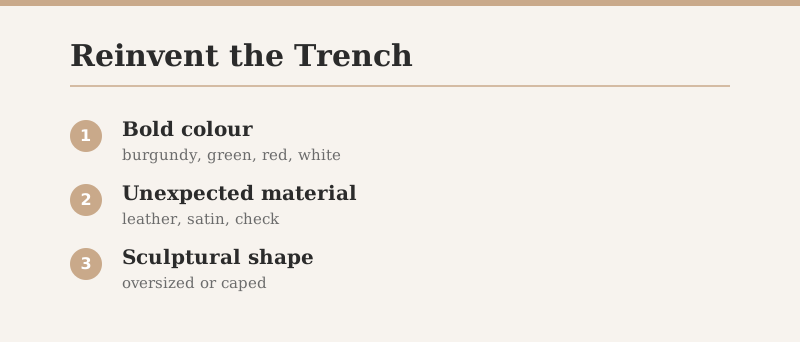
What actually makes a trench “reinvented” instead of just a coat?
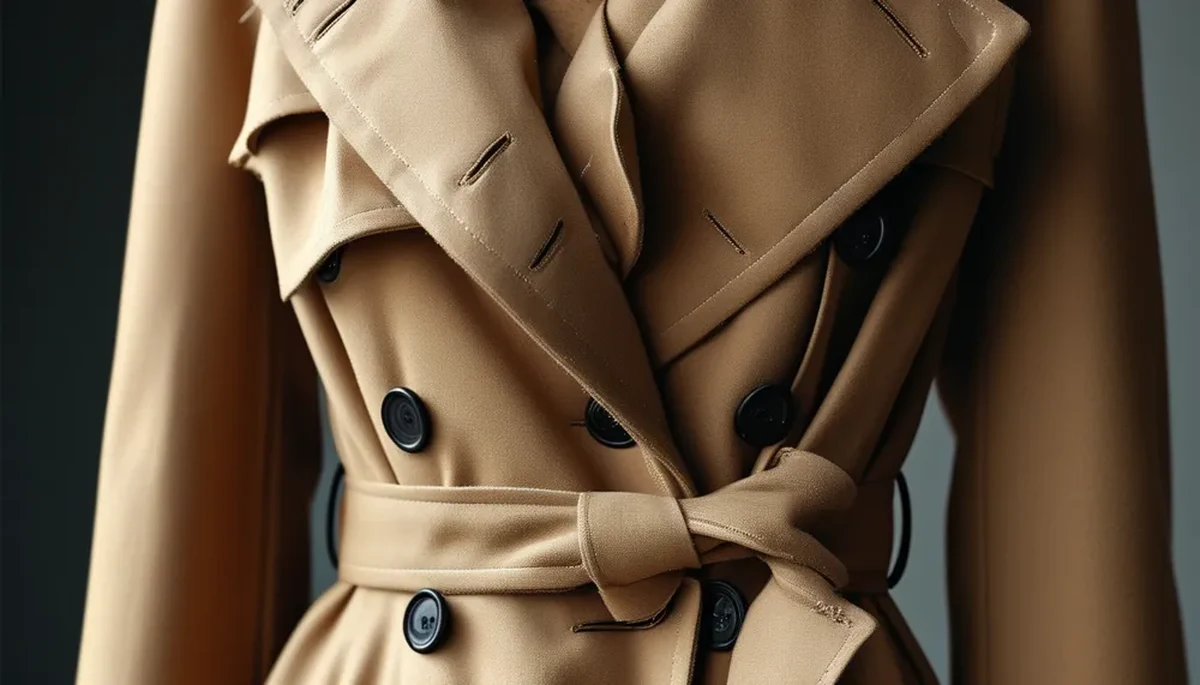
The trench has a specific set of design markers: a belted waist, wide notched lapels, a double-breasted front, and a hem that lands somewhere between mid-thigh and mid-calf. Keep enough of those and the eye files the coat under “trench” no matter what else you do to it.
That’s the whole trick. A red coat is a red coat. A red trench borrows a century of built-in elegance and then surprises you. The familiar shape does the heavy lifting so the unexpected part reads as a choice rather than an accident.
The rule of thumb that keeps it working: change one variable at a time. A burgundy trench in classic gabardine — one change. An oversized trench in classic beige — one change. A cropped, caped, vinyl trench in acid green — that’s three, and it stops looking like a reinvented classic and starts looking like a different garment entirely.
Which trench colours work best when you already own beige?
Colour is the easiest reinvention because the silhouette does all the reassuring. The shades that hold up year after year rather than dating in one season:
- Deep burgundy — reads almost as a neutral in autumn and winter, but pulls every outfit warmer.
- Forest green — the quiet one. Works with denim, camel, cream, grey, black. Basically everything you own.
- Cherry red — the loudest of the four and the most fun. A red trench over jeans and a white tee is instant, effortless drama with about nine seconds of effort.
- Optic white — crisp and expensive-looking from spring through early autumn, though it demands a dry-cleaning budget and a certain confidence around coffee.
Start with burgundy or forest if you’re nervous. They behave like neutrals in practice and give you the colour hit without the commitment.
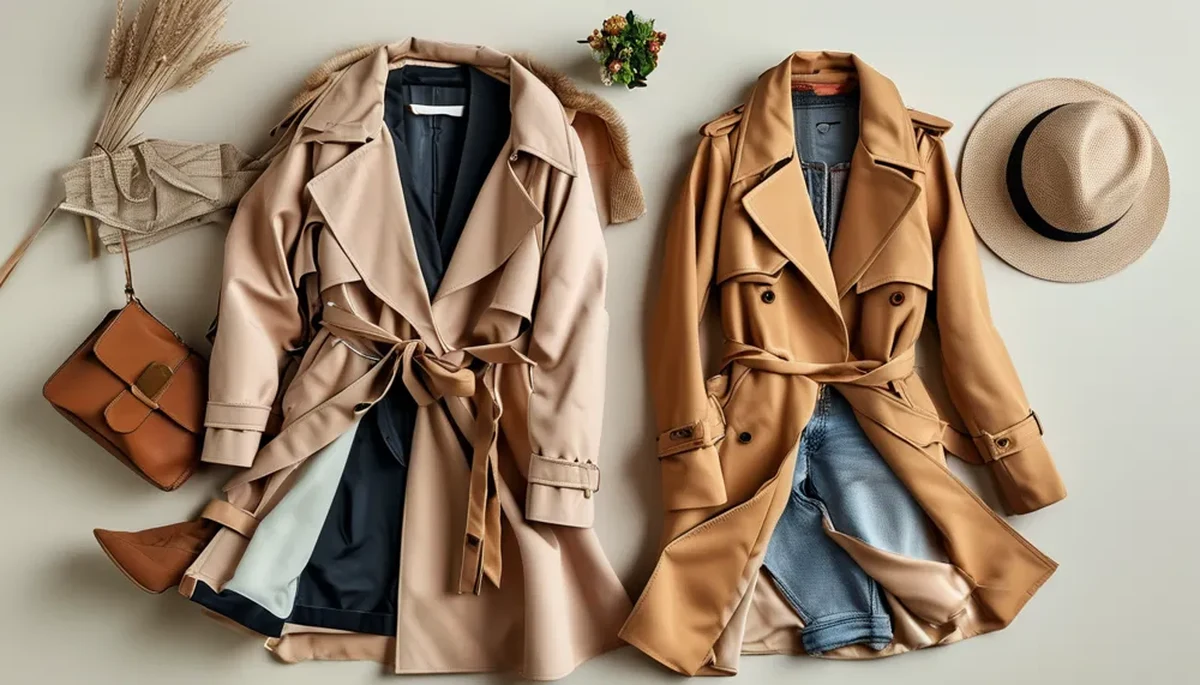
Are leather and vinyl trenches worth it, or just a trend?
A trench reinvented in leather, glossy vinyl, fluid satin, or a bold check brings completely new energy to a familiar shape. The lines stay elegant; the attitude changes entirely.
Leather is the most wearable of the group — a leather trench keeps every bit of the elegance and adds a bite that beige gabardine never had. It’s heavy, it ages well, and it reads polished rather than costume-y.
Vinyl and high-shine are the most fashion-forward and the most weather-honest, since they genuinely repel rain. They also photograph beautifully and breathe not at all, which makes them a cool-weather proposition.
Satin and fluid fabrics trade structure for drape. The coat moves instead of holding its shape, which is gorgeous over a dress and slightly shapeless over jeans.
Bold checks — glen plaid, houndstooth, windowpane — are the sneaky classics. They look adventurous and behave like neutrals.
How do you wear an oversized trench without looking swamped?
An oversized trench, a sculptural wrap, a dramatically caped version — playing with proportion gives the trench a genuinely modern edge. The failure mode is obvious: the coat wears you.
Three things keep that from happening:
- Keep everything underneath slim. Straight or slim trousers, a fitted knit. The volume should be one layer, not all of them.
- Show an ankle or a wrist. Push the sleeves up, crop the trouser, wear a shoe with some shape. A visible narrow point tells the eye the volume is deliberate.
- Let the shoulder land somewhere on purpose. A dropped shoulder is fine — a shoulder seam that’s wandered halfway down your arm is not the same thing.
Myth vs Fact: The Reinvented Trench
Myth: A statement trench only works a handful of times before it feels overexposed. Fact: The trench silhouette is so familiar that the colour or material reads as your signature rather than a trend. People remember the green coat. That’s the point.
Myth: A reinvented trench is harder to style than a beige one. Fact: It’s easier, because it removes decisions. A cherry-red trench wants a plain outfit underneath. A beige one leaves you staring into the wardrobe.
Myth: Leather and vinyl trenches are strictly evening pieces. Fact: Over jeans and a crewneck at 10am, a leather trench reads as a good coat, not a going-out coat. Context is set by what’s under it.
Myth: Oversized means buy two sizes up. Fact: Coats cut for volume have the shoulder, armhole and sleeve redrawn. A standard trench two sizes up just has sleeves that swallow your hands.
How should you style a statement trench day to day?
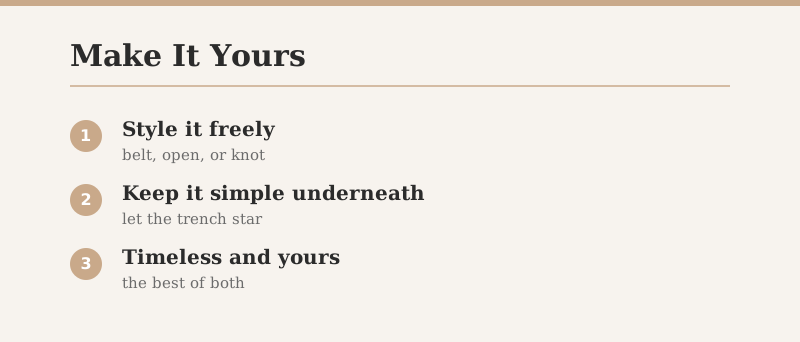
Belt it dramatically for definition, wear it open and loose for ease, or throw it over an unexpected outfit for contrast. The small choices are what make it yours: tie the belt in a soft knot instead of buckling it, pop the collar, push the sleeves to the elbow.
The one styling principle worth keeping: let the coat be the loudest thing you’re wearing. Jeans and a plain knit underneath aren’t lazy — they’re what makes the coat land.
Is a reinvented trench actually a good investment?
A distinctive trench gives you the reliability of a classic without the sameness. It bridges seasons, works over everything from dresses to denim, and carries an elegance nothing else quite matches — now with a point of view.
Practically speaking, it earns its place if you’ll wear it at least 20 times a year, which for a spring-and-autumn coat means roughly twice a week across two shoulder seasons. That’s an easy bar for burgundy or forest green, a slightly harder one for optic white.
FAQ
Can a reinvented trench replace a classic beige one?
If you only want one trench, a deep burgundy or forest green covers nearly everything beige does and adds interest. If you already own beige, treat the coloured one as the piece you reach for when the outfit underneath is plain.
What length works best for a bold colour or material?
Mid-calf and below reads most intentional in a strong colour — long lines make loud shades look designed rather than accidental. Shorter, cropped versions work better in leather and check, where the material already carries the interest.
How do I stop a statement trench from dating?
Keep the trench markers intact and avoid stacking novelty. A green trench with classic detailing will look current in five years. A green trench with a cape, cropped sleeves and a corset belt is a photograph of this season.
TL;DR:
- The trench blueprint — belt, lapels, long lean line — is what lets a bold colour or material still read as elegant.
- Change one variable: colour, material, or proportion. Not all three.
- Best entry colours: burgundy and forest green; both behave like neutrals in practice.
- Leather is the most wearable non-traditional material; satin drapes, vinyl shines, check hides in plain sight.
- Oversized works when everything underneath stays slim and one narrow point (ankle, wrist) stays visible.
- Keep the rest of the outfit plain and let the coat be the statement.
Keep Reading
This article is for general styling and informational purposes only. Trends, sizing, availability and pricing may vary by brand and season.