The Classic Wardrobe Rule Almost Nobody Follows: Matching Leather Finish, Not Just Color
Quick Answer: Matching shoe and belt color alone (both brown, both black) isn’t enough for a fully polished classic look — pairing matte-finish leather with matte, or polished with polished, matters just as much, since mismatched finishes can look slightly off even when the colors technically match.
Two brown items in the same outfit can still look mismatched, and finish, not color, is usually the overlooked reason why.

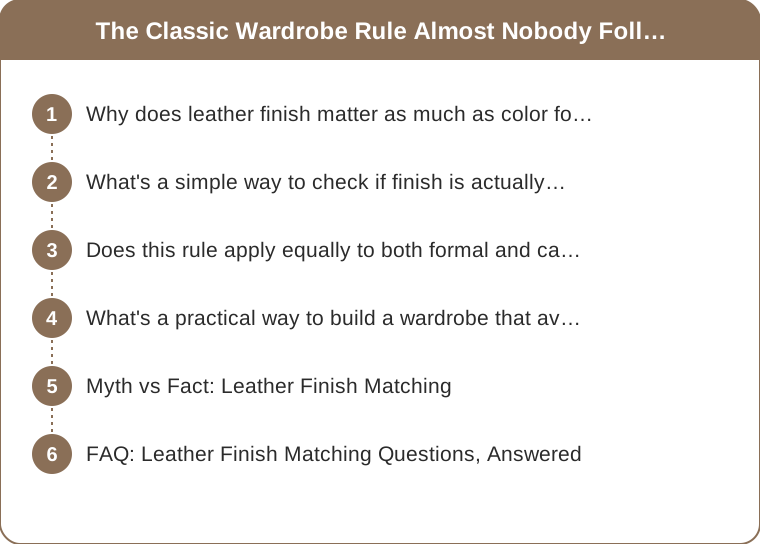
Why does leather finish matter as much as color for a coordinated look?
Matte and high-shine polished leathers read as different formality levels even in the same color family — pairing a matte, textured belt with glossy patent shoes (or the reverse) creates a subtle visual inconsistency that a color match alone doesn’t fix, since the eye reads sheen and texture as much as hue.
What’s a simple way to check if finish is actually mismatched in an outfit?
Looking at how light reflects off each leather piece side by side — a noticeably shinier piece next to a flatter, more matte one signals a finish mismatch even when the color match looks correct at first glance.
Does this rule apply equally to both formal and casual classic outfits?
It matters more as formality increases — a very casual outfit has more finish flexibility, but a polished, classic look (a blazer, structured trousers) is exactly where finish mismatches become more noticeable and worth correcting.

What’s a practical way to build a wardrobe that avoids this mismatch?
Owning one core matte-finish leather set (a belt and a pair of shoes) and one core polished-finish set, rather than mixing individual pieces freely, makes coordinated pairing automatic rather than something to consciously check each time.
Myth vs Fact: Leather Finish Matching
Myth: Matching shoe and belt color is the only leather coordination rule that matters. Fact: Finish — matte versus polished — affects how coordinated an outfit reads just as much as color.
Myth: Leather finish mismatches are too subtle for most people to notice. Fact: While it may not be consciously named, mismatched finish often registers as an outfit looking slightly “off” without an obvious explanation.
Myth: This level of detail only matters for very formal dressing. Fact: It’s most noticeable in polished-casual classic looks — very casual outfits have more natural flexibility here.
FAQ: Leather Finish Matching Questions, Answered
Do shoes and belt need to be the exact same leather finish every time?
For a polished classic look, yes, matching finish (not just color) creates a more coordinated result — more casual looks have more flexibility.
What’s an easy starting point for building a coordinated leather wardrobe?
One matte brown or black set and one polished set covers most classic-outfit needs without requiring many separate pairs.
Does patent leather have its own separate matching rule?
Patent’s high shine is its own distinct finish level — it generally pairs best with other high-shine or dressier pieces rather than matte, everyday leather.
TL;DR:
- Matching color alone misses a real coordination factor: leather finish
- Matte and polished leathers read as different formality levels, even in the same color
- This matters most in polished, classic looks, less in very casual outfits
- Building one matte set and one polished set makes coordination automatic
Finish is the overlooked half of the classic shoe-and-belt matching rule.
Keep Reading
This article is for general styling and informational purposes only. Trends, sizing, availability and pricing may vary by brand and season.