The Silk Square Beyond the Neck: Wearing the Classic Scarf Like It's 2026
Quick Answer: Stop tying it neatly at the neck. The current moves are in the hair — a folded headband, a ponytail wrap, a bun tie — plus a loose cowboy drape, a bag-handle wrap, or folded into a sash belt. The 90cm square does nearly all of it, and thrift shops and family drawers are full of them.
There’s probably one in a drawer right now. Inherited, or bought on a trip, still in its box.
It’s been there because the only way anyone was ever taught to wear it — the neat little knot at the throat — reads distinctly 1987 air hostess.
Here’s what it’s actually for now.
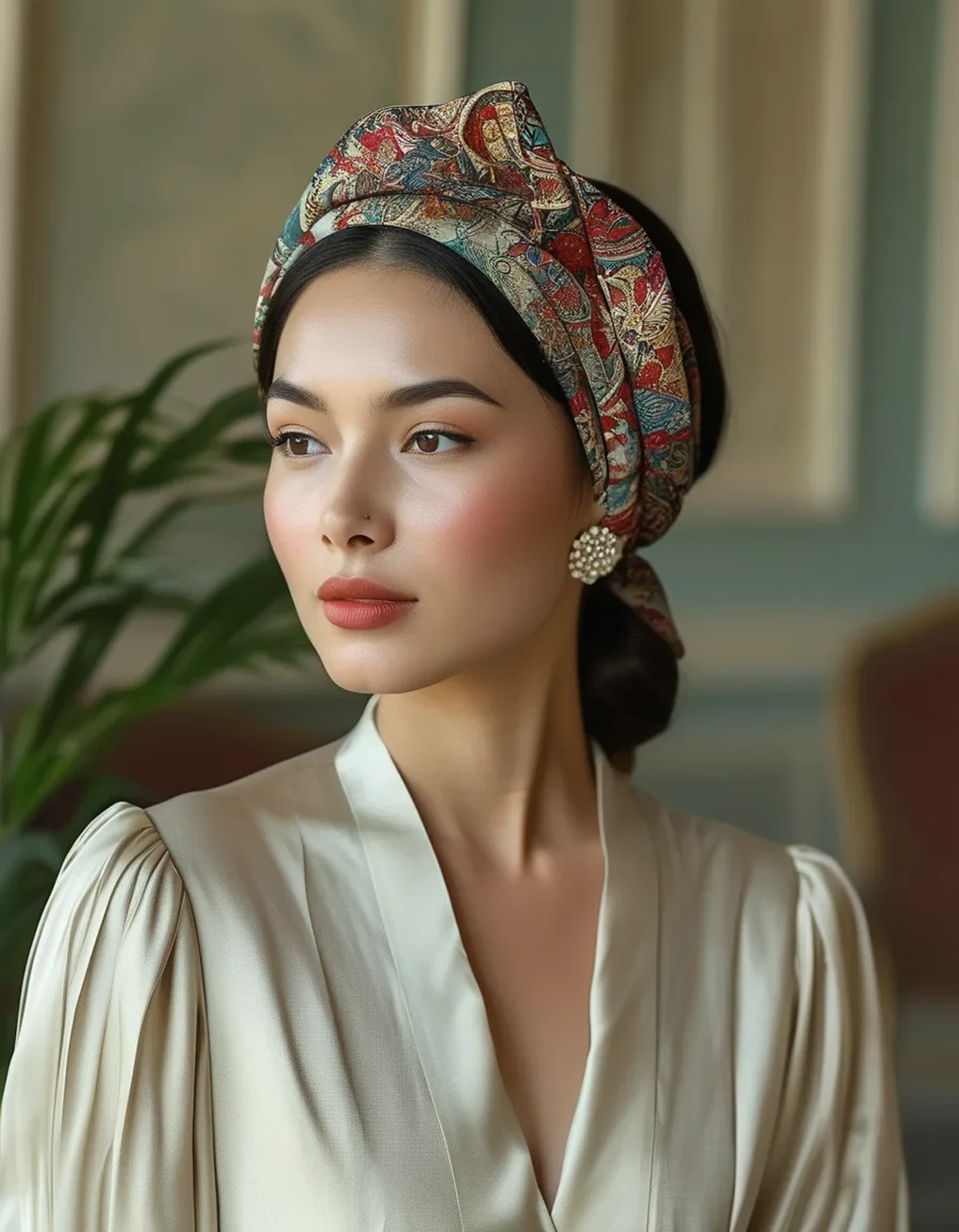
Why are silk squares having a moment?
Several things landed at once.
Vintage supply met new demand. Silk squares are secondhand gold — thrift shops, estate sales and family drawers are full of them, and they’ve survived decades because good silk simply doesn’t wear out the way knitwear does.
The styling escaped the neck. Hair, bag and belt applications changed the whole proposition. The same object, worn three inches higher, reads completely current.
It fits the quiet-luxury logic. Pattern and material speaking without a logo. A silk square is arguably the original version of that idea.
The economics are excellent. One square recolours every neutral outfit you own. It’s the highest-rotation accessory per square inch in most wardrobes — which puts it in the same category as modern styling tricks that do a lot with very little.
And it activates an heirloom. Your grandmother’s scarf, worn your way, is the rare sentimental object that also just works.
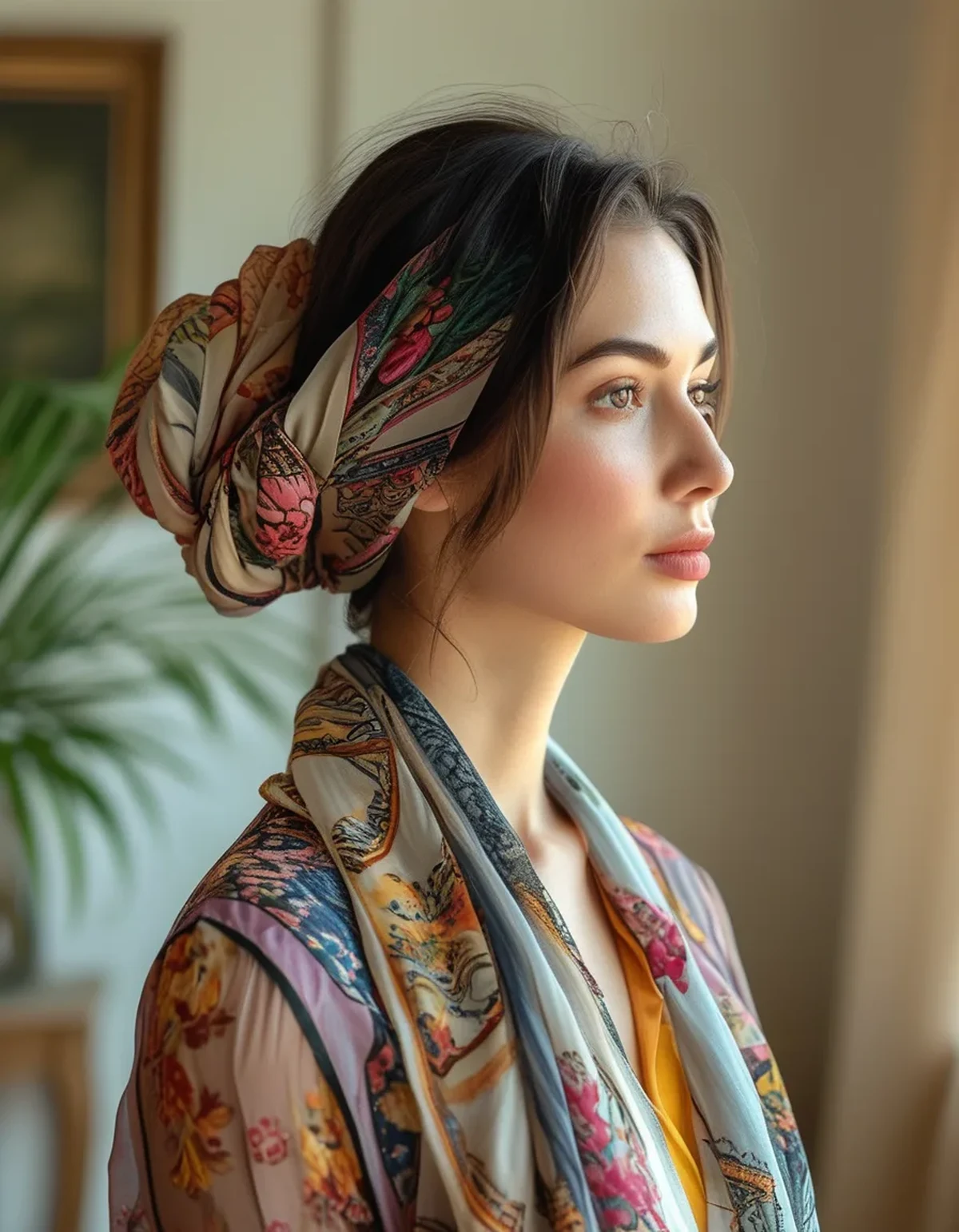
What are the modern ways to wear a silk scarf?
In the hair — the most current use by a distance.
- Headband fold: fold the square into a 5cm band, run it under your hair, tie on top or at the nape.
- Ponytail wrap: tie your ponytail first, then knot the scarf over the elastic and let the ends fall.
- Bun tie: wrap around the base of a bun, knot, leave the tails loose.
- The claw-clip hybrid: thread the folded scarf through the clip before you close it. Two minutes, very effective.
At the neck, but loosely. The cowboy drape — folded into a triangle, point forward, knotted loosely behind — has replaced the tight knot entirely. A long fold worn as a soft choker works too. Or simply drape it flat over the shoulders under a blazer.
On the bag. Wrap the handle, or tie it to a tote strap and let it hang. This recolours a bag for a season without buying a bag, which is the best value in the whole list.
As a belt. Fold the square down to a 4–5cm sash and thread it through belt loops, or tie it over a dress at the waist. Knot at the front, ends hanging.
At the wrist or ankle. Small knots that read as jewellery-adjacent. Quiet, but distinctive.
And the neckerchief version is entirely gender-free — it always was.
Myth vs Fact
Myth: You need an expensive designer square for this to work. Fact: Quality of silk matters; the label doesn’t. A good vintage twill square from a charity shop outperforms a new polyester one at any price.
Myth: Silk squares are for older women. Fact: The hair applications are almost entirely worn by people in their twenties and thirties. It’s the neck knot that carried the age association, and that knot is what changed.
Myth: You should fold and stack them like linens. Fact: Fold lines set into silk permanently. Roll them — loosely, around a tube if you’re serious — or hang them over a padded rail.
Myth: Any old scarf will do the hair moves. Fact: Silk’s slipperiness is the problem, not the point. For headbands and ponytails, tie tighter than feels right; silk loosens as you move, and a slightly firmer knot at 9 a.m. is still comfortable at 5 p.m.
What should you look for when buying one?
Size first. The 90cm square is the workhorse — it handles hair, neck, bag and belt. Smaller bandana squares (around 55cm) suit hair and wrists. Oversized 140cm pieces are wraps, not squares, and behave differently.
Quality tells. Hand-rolled edges — a slightly raised, rounded hem — are the classic sign of good construction. Weight matters too; twill silk has body and holds a fold, while thin silk slips out of every knot you tie. The hand test: silk warms to your skin quickly and polyester stays cool and slightly slick.
Where to source. Family drawers first, genuinely — audit them before you buy anything. Then thrift, estate sales and vintage resellers. Buy new heritage pieces only when you know you’ll wear them weekly.
Pattern choice. Match to your neutrals, not to a trend. A multi-colour square that contains two or three shades you already wear will bridge more outfits than a beautiful one in colours you own nothing in.
Care. Hand-wash cold with a gentle detergent or dry-clean; never wring. Store rolled, and spray perfume before the scarf goes on — alcohol marks silk permanently.
FAQ
How do I stop a silk scarf slipping out of my hair?
Tie it over an elastic or clip rather than against bare hair, and knot it a little tighter than feels necessary. A tiny bobby pin at each side is invisible and solves it entirely.
What size scarf is most versatile?
90cm. It’s large enough to fold into a belt or drape at the neck, and small enough to work as a headband without excess bulk.
Can I iron a silk scarf?
Yes — lowest setting, inside out, with a cloth between the iron and the silk. Better still, hang it in a steamy bathroom and let the creases drop out on their own.
TL;DR:
- The hair moves are the current ones: headband fold, ponytail wrap, bun tie, claw-clip hybrid.
- At the neck, drape loosely — the tight knot is what dated.
- Wrap a bag handle or fold into a sash belt for the best value per scarf.
- 90cm is the workhorse size; look for hand-rolled edges and twill weight.
- Store rolled, never folded. Perfume first, scarf second.
Ninety centimetres, thrifted or inherited, worn in the hair first. The square never went anywhere — it just needed to leave the drawer.
Keep Reading
This article is for general styling and informational purposes only. Trends, sizing, availability and pricing may vary by brand and season.