Trench Coat Belt Sitting Wrong at the Waist: Causes and Quick Fixes
Quick Answer: A trench belt sits wrong at the waist when it runs through the wrong loops, when the coat’s waist seam sits higher or lower than your natural waist, or when the tails hang unevenly. Start by threading the belt through the loops that line up with your natural waistline, then tie a simple knot with even tails. Most of the time, that single change fixes the look without any alteration.
You bought the trench because it looked effortless in the photos. In the mirror, though, the belt keeps sitting a little low, the tails hang at different lengths, and the whole coat looks like it is trying a bit too hard. The good news is that the trench is designed around a belt, so the fix usually lives in the belt itself.
Why does the belt look off on a trench?
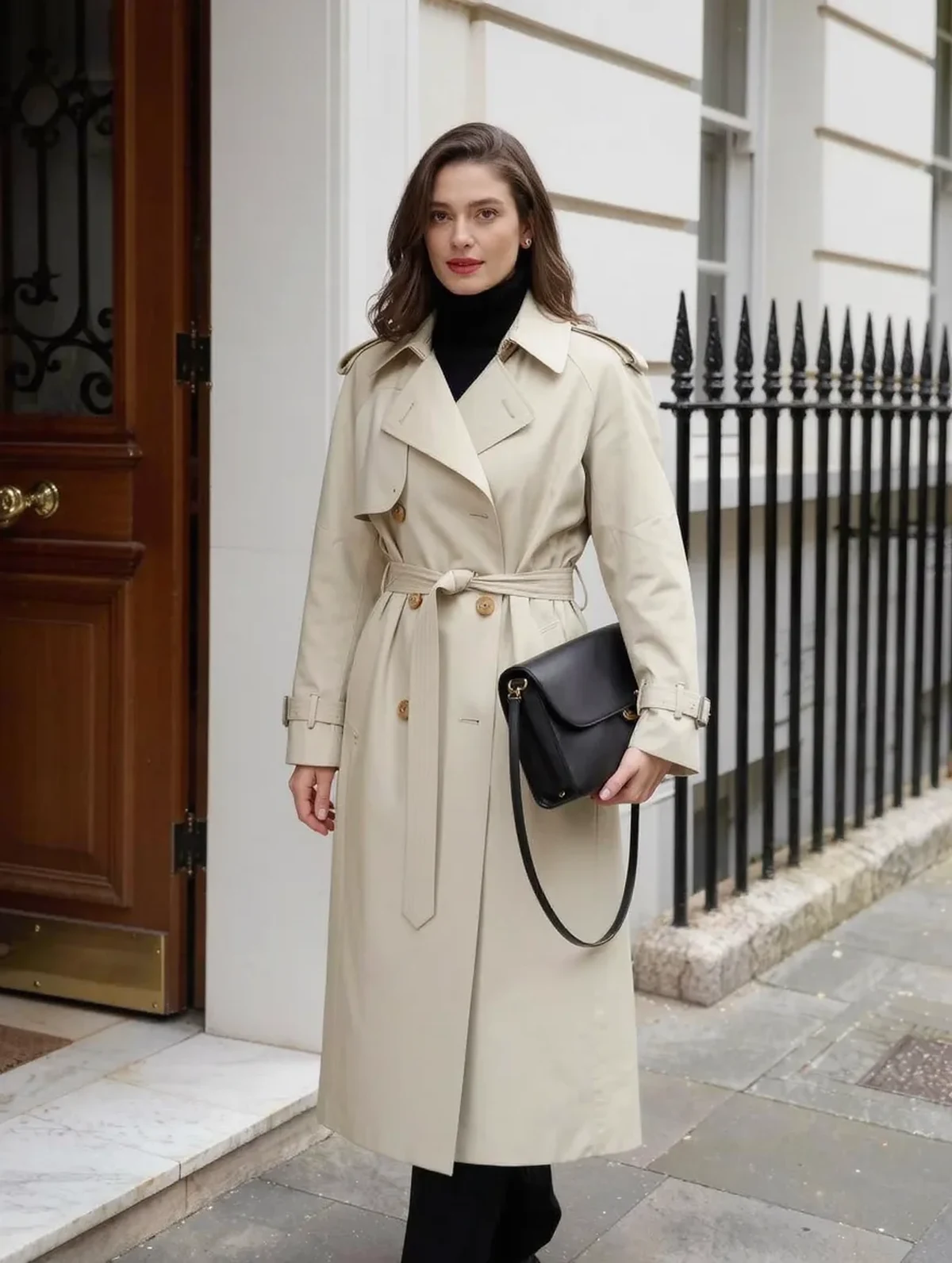
A trench coat is built around a clear waist line, and the belt is meant to sit on that line. Most trench designs place the waist seam, the belt loops and the belt itself at one height, drafted for an average waist. If your natural waist sits higher or lower than that height, the belt will look like it has dropped or climbed.
The second cause is the loops. Many trench coats have belt loops at the side seams and at the back, and each pair is placed for a slightly different look. Threading the belt through the wrong pair can make it pull at the front or ride up at the back. The third cause is the knot. A knot that is too bulky or sits off center will pull the coat out of shape even when the loops are correct.
How do you find your natural waist on a trench?
Put the coat on over the clothes you wear most often, then tie the belt loosely at what feels like your natural waist. Stand side by side in front of a mirror and look at the coat’s waist seam. If the seam sits right where the belt is, you have found the right height. If the seam sits above or below the belt, try moving the belt up or down one set of loops.
Check from the side too. A belt that looks right from the front can ride up at the back, so stand sideways and turn slowly. The goal is a belt that stays level all the way around, with the coat’s shoulders and hem sitting in the same line as before.
Myth vs Fact: A Trench Belt Should Always Be Pulled Tight
Myth: the belt has to be cinched as tight as possible to look polished. Fact: a belt tied snugly, with a slight relaxed drape, looks more classic and comfortable than one pulled tight enough to create lines in the coat.
A tight belt also changes the coat’s shape. It pulls the waist in hard, creates creases at the sides and can make the front panels look strained. A good test is to tie the belt, then sit down and stand up again. If the belt holds its line without digging into the fabric, the tension is right.

Which knot and tail length look best?
A simple, even knot is the most reliable choice. Tie the belt in front at the center, make a single overhand knot, and let the tails hang to roughly the same length. If the belt is long, a double wrap before the knot keeps the tails from dropping too low. If the belt has a buckle, choose the side buckle for a softer line, and keep the buckle flat against the coat so it does not pull.
Check the tail length once you are dressed. Tails that hang far past the hem can look like an afterthought, while tails that stop short can make the belt look too tight. Aim for tails that end somewhere around the hip or upper thigh, and make sure they match on both sides.
5 Mistakes That Make the Belt Look Wrong
-
Threading the belt through the wrong loops. Check every pair before you tie the knot, because the wrong pair changes the whole waist line.
-
Leaving the tails uneven. Even a small difference in length is visible in photos and mirrors.
-
Choosing a belt that is too long. Extra length gets bunched and knotted, which creates bulk at the front.
-
Tying the belt over a thick knit. A bulky sweater under the coat can make the knot sit too high and push the belt out of line.
-
Forgetting to check the back. A belt that looks perfect from the front can twist or ride up when you turn, so always look at yourself from the side.
When should you ask a tailor?
If the belt loops are sewn too far apart, the buckle sits crooked or the waist seam is clearly in the wrong place, it is time for a tailor. A tailor can move a belt loop, reset the waist seam or adjust the belt so it sits on your natural line. Ask them to show you the change before they cut or stitch anything, so you can confirm the height and the look.
Bring the coat and the sweaters or blouses you wear most often under it. That way the tailor can check the waist line with the layers you actually use, not just with the coat on its own.
FAQ: Trench Belt Questions, Answered
Can I wear the trench belt open?
Yes. Many people wear a trench open with the belt tied loosely at the back or threaded through the loops only. This gives a relaxed look, but the belt should still sit level so the coat keeps its shape.
Should the belt sit at my natural waist or at the coat’s waist seam?
Ideally, the two should line up. If they do not, choose the position that looks most balanced in the mirror, then adjust the coat’s fit with a tailor if the difference bothers you.
Can I swap in a different belt?
Yes, as long as the new belt is the right width and length for the loops. A narrow belt can look delicate on a classic trench, while a wide belt changes the whole silhouette, so test both before you decide.
TL;DR:
- A trench belt sits wrong when it runs through the wrong loops, the waist seam is misaligned or the tails are uneven.
- Tie loosely at your natural waist, then check the line from the front and the side.
- Use a simple, even knot and keep the tails the same length.
- Ask a tailor to move the loops or reset the waist seam only if the fix does not hold.
Once the belt lines up with your waist, the trench looks like it was made for you, which is exactly what makes a classic coat feel effortless.
Keep Reading
This article is for general styling and informational purposes only. Trends, sizing, availability and pricing may vary by brand and season.