Why Belt Width Decides Whether a Classic Outfit Works
Quick Answer: Belt width changes where the eye divides your body, and a belt that is the wrong width for the garment will fight the proportions the garment was cut to create. The working rule: match the belt’s visual weight to the garment’s — fine belts for fluid fabric and low-contrast outfits, wider belts for structured tailoring and coats. Contrast between belt and clothing matters more than width in isolation, because a matching belt at any width reads as a seam rather than as a line.
You put on an outfit you have worn a hundred times, add a belt because it seemed like the finishing touch, and it looks worse. Not obviously wrong — just slightly heavier, or slightly shorter, or somehow less considered. That is almost always width doing something you did not ask it to.
What does belt width actually change?
It changes where the horizontal line sits, and how strong that line is.
An outfit without a belt reads as continuous. Add a belt and you have introduced a horizontal division, and the eye reads the two resulting sections as proportions. A wider belt makes that line stronger and, because it occupies real vertical space, it also raises or lowers the apparent waist depending on where it sits.
This is why width and placement cannot be separated. A five centimetre belt worn at the natural waist creates a strong, high division and lengthens the leg. The same belt worn on the hip creates a strong, low division and does the opposite. A two centimetre belt in either position makes a much quieter suggestion.
And contrast is the multiplier. A black belt on black trousers at any width is essentially invisible — it reads as a detail rather than a line. The same belt on cream trousers is the single strongest horizontal in the outfit. So the real question is never just how wide, it is how wide and how visible together.
Which widths go with which garments?
There is a reliable correspondence between the weight of the fabric and the weight of the belt.
Fine belts, up to about two centimetres. For fluid fabrics — silk, fine viscose, lightweight knit — and for low-contrast outfits where you want definition without a statement. Also the right choice through the loops of slim tailored trousers, where a wider belt bunches the waistband and creates a visible ridge under a tucked shirt.
Mid belts, roughly two and a half to four centimetres. The genuine default, and the width most classic wardrobes are short of. Works with denim, with most trousers, with a shirt dress, and with a knit. If you own one belt, this is the one.
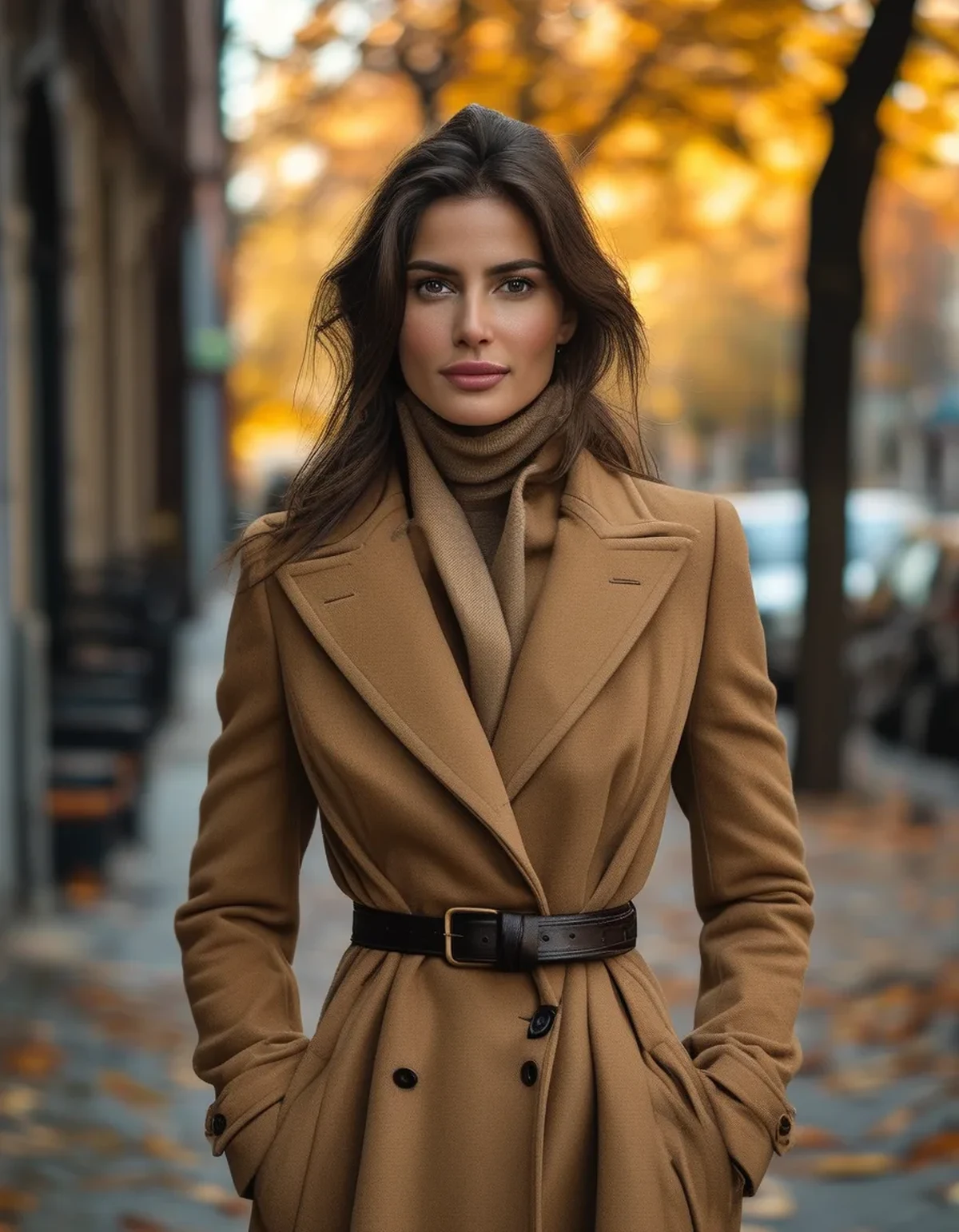
Wide belts, four centimetres and up. For structure: a coat, a heavy knit, a tailored jacket worn belted, a full skirt with body to it. Wide belts need something with enough weight to hold their own against them, which is why a wide belt over a soft jersey dress tends to look as though the dress is being strangled rather than shaped.
And the belt loops decide for you more often than people admit. If the garment has loops, the belt must fit through them comfortably. A belt forced through tight loops distorts the waistband, and that distortion is visible from across a room even when the belt itself looks right.
What Nobody Tells You About Belts in Classic Outfits
The buckle counts towards the width. A three centimetre strap with a large square buckle reads as considerably wider than its measurement. If you are trying to keep things quiet, look at the buckle before you look at the strap.
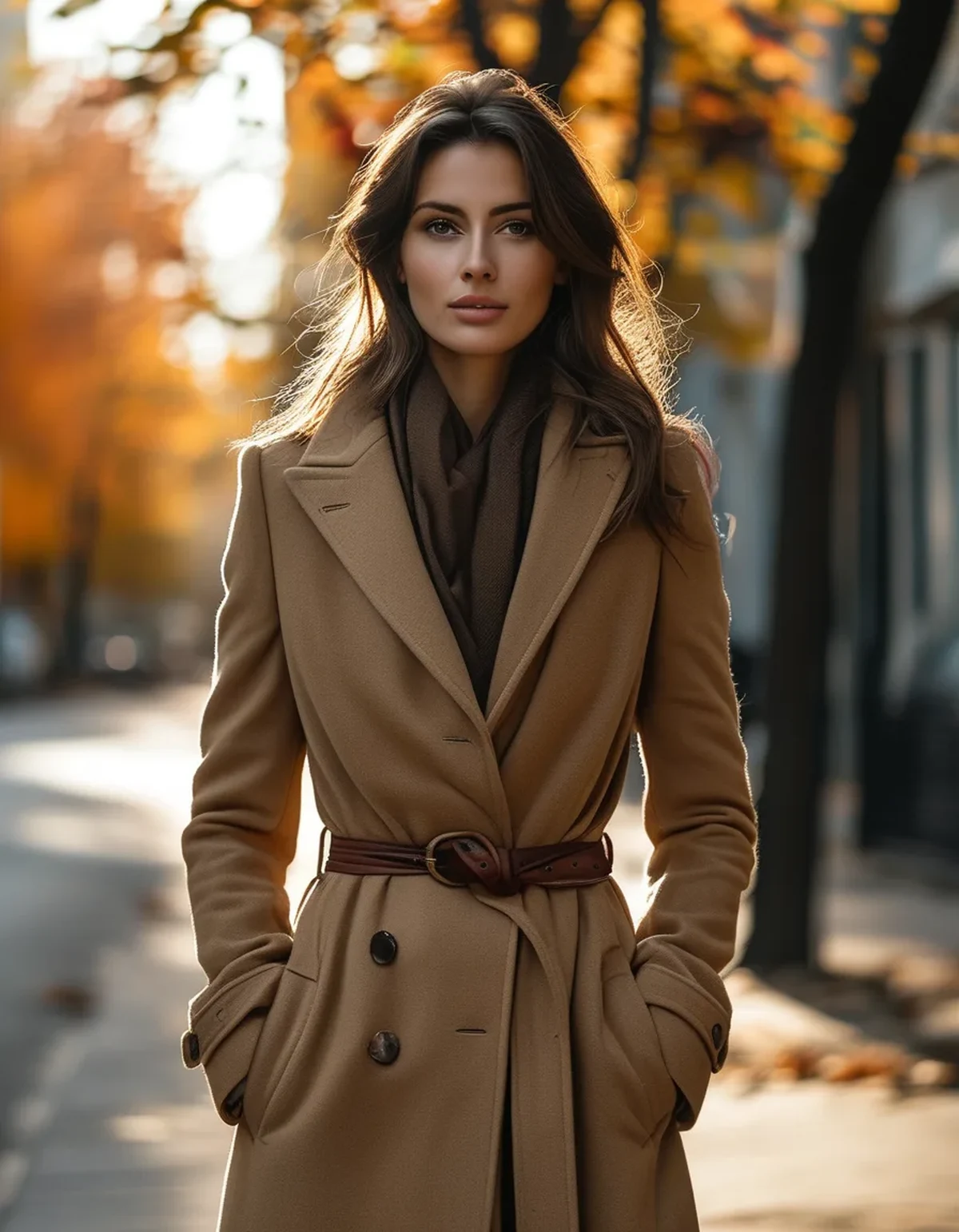
A belt worn over a coat is a different accessory from a belt worn at the waist. Over outerwear it sits further from the body, so it needs more width to register at all — the thin belt that is elegant over a dress disappears over a wool coat and simply looks like it has been forgotten.
The self-belt that came with the garment is usually the right width and the wrong material. Designers choose the proportion carefully and then execute it in the cheapest possible fabric. Replacing a self-belt with a leather belt of exactly the same width is one of the highest-return small upgrades in a wardrobe.
Leather quality shows at the edge, not the face. A cheap belt gives itself away by the painted raw edge that cracks within a season. A good one has a folded or burnished edge. This is the same tell as on a handbag and it costs nothing to check.
And a belt that is the right width but the wrong length ruins the effect. The tail should finish somewhere between the first and second loop past the buckle. A long tail hanging down reads as borrowed; a tail that barely clears the buckle reads as too small. Belts can be shortened by any cobbler for very little.
How do you choose, practically, in front of a mirror?
Four checks, and they take less time than deciding on shoes.
Step back to three metres. Belt decisions made at arm’s length are almost always wrong, because at that distance you see the belt and not the proportion. The horizontal line only becomes visible at conversational distance.
Ask what the outfit already does. If the trousers are already high-waisted and the leg is already long, a strong belt adds emphasis to something that is working. If the silhouette is soft and undefined and you want definition, that is when a visible belt earns its place.
Check the ridge. Turn side-on and look for bunching at the waistband or a bulge where the buckle sits under a tucked layer. This is the single most common reason a belted outfit looks untidy, and it is entirely a width-versus-loops problem.
And be willing to take it off. More classic outfits are spoiled by an unnecessary belt than by the absence of one. If you cannot articulate what the belt is doing — lengthening the leg, defining a waist, adding the one point of contrast — then it is decoration, and classic dressing is mostly the discipline of removing decoration.
FAQ: Belt Questions, Answered
Does my belt have to match my shoes?
No, and the rule has been loosening for years. What genuinely helps is matching the leather’s finish and tone family — a polished black belt with polished black shoes, a tan matte belt with tan matte boots. An exact colour match is unnecessary and often impossible across different leathers.
What width is most versatile if I can only buy one?
Around three centimetres in a mid-brown or black leather with a simple buckle. It fits most trouser loops, works over a knit, and is neither a statement nor invisible. Wide and fine belts are both second purchases.
Should I belt a coat with its own tie belt or replace it?
Keep the tie for softness and buy a leather belt in a similar width for structure — they create genuinely different looks from the same coat. Tied rather than buckled reads more relaxed; a buckled leather belt at the same width reads sharper and is the better option with tailoring underneath.
TL;DR:
- Belt width sets how strong the horizontal division across your body is; contrast against the clothing decides whether it registers at all.
- Match visual weight: fine belts with fluid fabric, mid widths as the default, wide belts only with structured garments and coats.
- Count the buckle in the width, check the belt loops, and look at the edge finish rather than the face for quality.
- Judge it at three metres, not in the mirror at arm’s length — and take the belt off if you cannot say what it is doing.
A belt is the smallest accessory with the largest effect on proportion, which is why it is worth owning two good ones rather than six indifferent ones. Get the width right and the outfit looks deliberate. Get it wrong and nothing looks obviously broken, which is precisely what makes it so hard to spot.
Keep Reading
This article is for general styling and informational purposes only. Trends, sizing, availability and pricing may vary by brand and season.