Why Buttons Are the Fastest Quality Tell on a Classic Piece
Quick Answer: Buttons are where cost-cutting happens first, because they are the cheapest component to downgrade and the last thing shoppers examine. Check four things: weight in the hand, whether there is a shank or reinforcement behind the button on thick fabric, whether the buttonholes are cleanly finished rather than frayed, and whether spares were included. A coat with heavy horn or corozo buttons, shanked and reinforced, is almost never a badly made coat - the maker who paid for those paid for the rest.
The fabric felt right and the cut looked right and the price was more than you meant to spend.
The buttons would have told you in four seconds, and they are the thing nobody picks up.

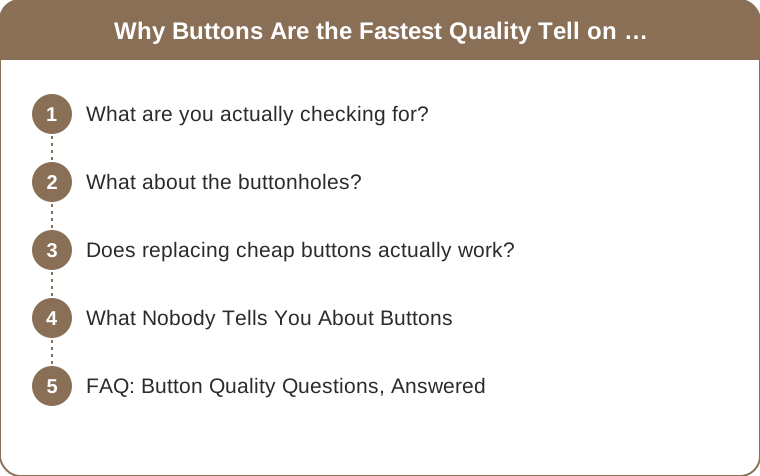
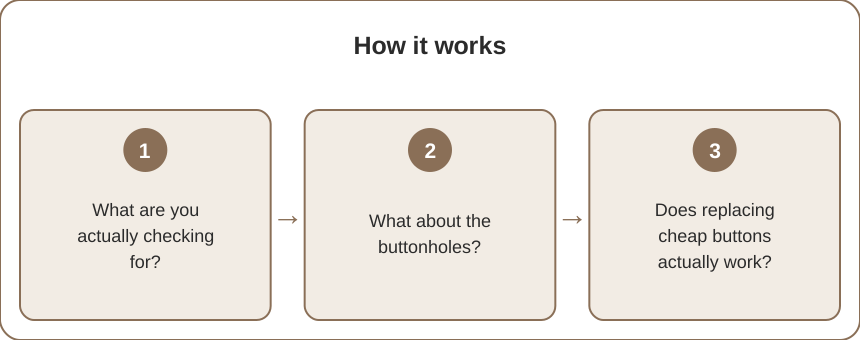
What are you actually checking for?
Weight first. Pick a button up between two fingers. Natural materials - horn, corozo, mother of pearl, real shell - have a density that plastic does not, and the difference is obvious once you have felt both.
Temperature is the second tell. Natural buttons feel cool to the touch and warm slowly; plastic is at room temperature immediately.
Look for variation. Genuine horn and corozo have irregular grain and slight colour differences between buttons, which is a feature rather than a fault. Perfect uniformity across every button means moulded plastic.
Check for a shank on anything thick. A coat button sewn flat against heavy wool cannot close properly, so a good maker adds a shank - a stem of thread or a moulded stem - to give the fabric room.
Turn the placket over. A quality coat has a small reinforcing button or a patch of stay tape behind each front button, which stops the button pulling through the fabric over years.
And check for spares. A spare button attached inside the seam is a small cost that signals a maker expecting the garment to last long enough to need one.
What about the buttonholes?
Buttonholes reveal more than buttons, and they are harder to fake. A clean, dense stitch with no visible fabric fraying at the ends is the marker.
Keyhole buttonholes on coats are a good sign, since the rounded end accommodates the button shank and is more work to produce than a plain rectangular hole.
Check the cut edge inside the hole. Fraying on a new garment means the hole was cut before the stitching was dense enough, and it only gets worse.
Hand-finished buttonholes exist mainly on tailoring and are a genuine luxury marker, recognisable by the slightly irregular, raised stitch density.
Test the fit of button to hole. A hole too large lets the button slip open all day; too tight and you will stop doing it up, which is a design failure either way.
And count the stitches at the bar tack at each end - a dense bar tack is what stops the hole extending under stress, and it is the first thing cut on cheap production.

Does replacing cheap buttons actually work?
Yes, and it is one of the highest-return alterations available. Changing plastic buttons for horn or corozo on an otherwise well-cut coat genuinely transforms how it reads.
The cost is modest, typically the price of the buttons plus a small charge if you have a tailor do it rather than sewing them yourself.
Match the shank height to the fabric weight, since a flat button on a thick coat is the original problem and buying beautiful buttons does not solve it.
Keep the size identical or you will be remaking the buttonholes, which is where the cost stops being modest.
Sew with a shank of thread if the new buttons are flat, wrapping the thread under the button several times before finishing - this is a five-minute skill worth having.
But it does not fix a badly cut garment. Good buttons on a poor shoulder line simply produce a poor coat with nice buttons, and the shoulder is what people actually see.
What Nobody Tells You About Buttons
Buttons are the first thing brands downgrade when they hold a price point. When wool costs more and the retail price cannot move, the button budget goes before the fabric budget, because buyers touch the fabric and never touch the button. Comparing this year’s version of a repeat-buy coat to the one you bought three years ago is genuinely informative, and the buttons are usually where the difference shows first.
Corozo is the one to know about. It is a nut from a palm, sometimes called vegetable ivory, and it takes dye beautifully, feels dense and cool, and costs a fraction of what buyers assume. A brand using corozo has made a deliberate quality decision on a component nobody markets, which is exactly the kind of signal worth reading.
Mother of pearl on a shirt is not automatically good news. Genuine shell buttons are lovely and they are also brittle - they crack in industrial laundries and under a hot iron. A good shirt maker knows this; a brand using thin shell buttons on a shirt sold as easy-care has not thought it through.
Four holes versus two says almost nothing about quality, despite being the thing most often repeated. It is a style and tradition question. What matters is what is behind the button and how the hole is finished, and both take longer than four seconds to check only because nobody has told you to look.
The button placement matters more than the button. A jacket with a button sitting exactly at the widest point of the bust will gape regardless of what it is made of, and no amount of horn fixes a placket engineered to pull. Check where the buttons fall on your own body before you check what they are made of.
And a coat that has lost a button and cannot be matched is effectively finished, which is the practical argument for the spare. Replacing a whole set to fix one missing button is the most common reason a perfectly good coat leaves a wardrobe, and a single spare sewn into a seam prevents it entirely.
FAQ: Button Quality Questions, Answered
How do I tell horn from plastic quickly?
Weight and temperature. Horn is dense and cool to the touch with irregular grain. Plastic is light, room temperature, and identical across every button.
Is it worth replacing buttons on a cheap coat?
If the cut and fabric are good, yes - it is a small cost for a large change. If the shoulder line is poor, no amount of button will fix it.
What is corozo?
A dense nut used for buttons, sometimes called vegetable ivory. It feels close to horn, takes colour well, and is a quiet marker that a brand made a considered choice.
Why do coat buttons need a shank?
Thick fabric needs space to sit under the button when fastened. Without a shank the front pulls and distorts, which is what makes a coat gape at the chest.
Do spare buttons really matter?
Enormously, because an unmatched missing button is the most common reason a good coat gets retired. Sew any spares into an inside seam the day you buy it.
Are hand-finished buttonholes worth paying for?
On tailoring they are a genuine marker of construction quality. On everything else, a dense machine buttonhole with a good bar tack is entirely sufficient.
TL;DR:
- Buttons are downgraded first because buyers touch the fabric and never touch the button.
- Check weight, temperature, natural variation, a shank on thick fabric, and reinforcement behind the placket.
- Buttonholes tell you more: dense stitching, a clean cut edge, keyhole shape on coats, and a solid bar tack.
- Replacing plastic with horn or corozo is one of the highest-return small alterations there is.
- Sew any spare buttons into an inside seam immediately - an unmatched missing button retires more good coats than wear does.
Four seconds at the placket tells you what the label was never going to.
Keep Reading
This article is for general styling and informational purposes only. Trends, sizing, availability and pricing may vary by brand and season.