Why Purely Classic Pieces Can Start to Read as Costume-Like Without One Unexpected Detail
Quick Answer: When every piece in an outfit matches a recognisable classic archetype exactly — trench, pearls, loafers, all textbook — the look reads as a reference to “classic style” rather than as your choice. One deliberate break in the pattern fixes it. Pick a detail that still shares a colour family, material or era with everything else, so it reads as a twist rather than a clash.
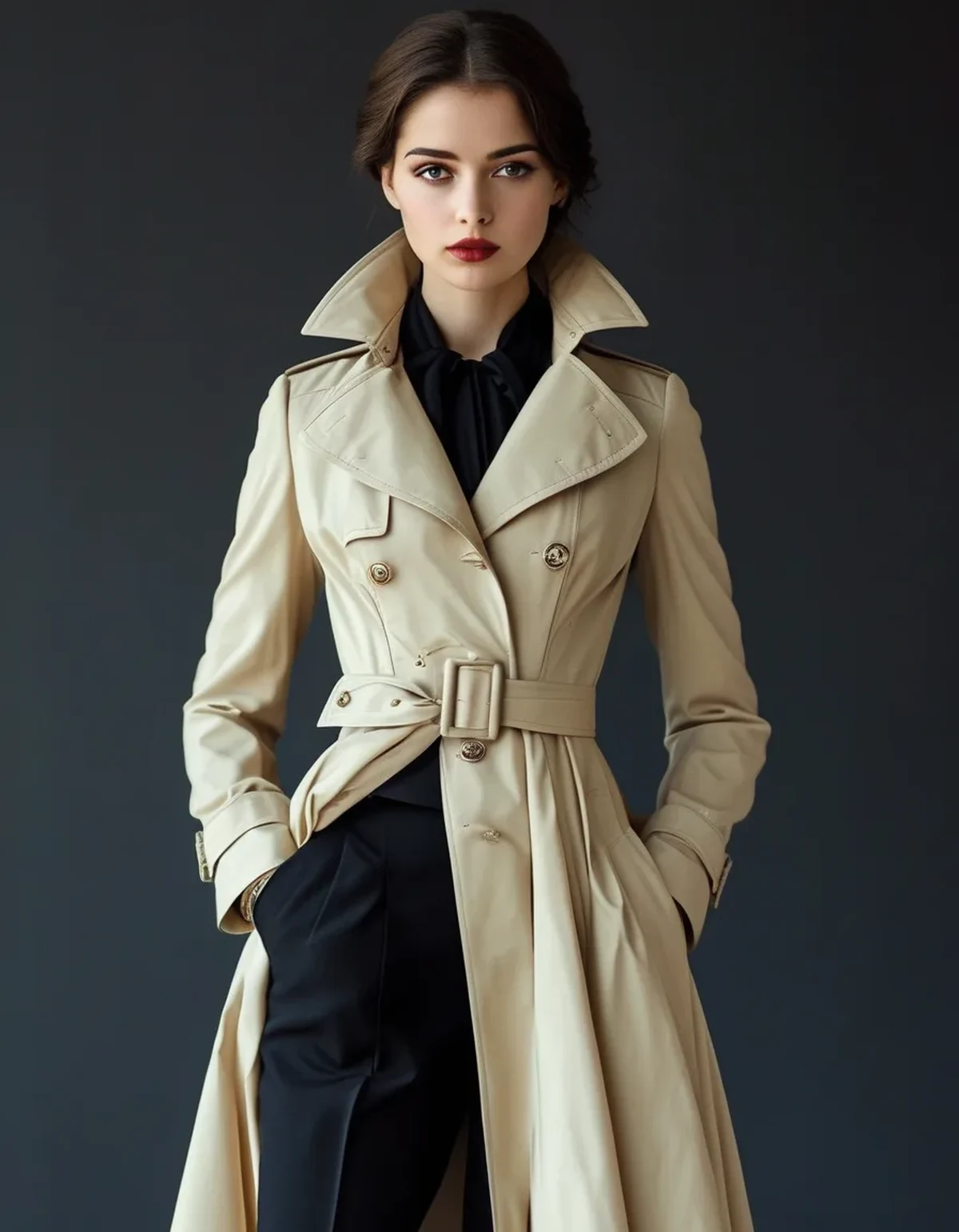
The trench is perfect. The pearls are right. The loafers are the correct loafers.
And somehow the whole thing looks like a very good costume of a woman with excellent taste, rather than a woman with excellent taste. Nothing in it is wrong, which is precisely the problem.
Why Does an All-Classic Outfit Read as Costume?
Because total consistency stops reading as taste and starts reading as citation.
Each classic piece carries an archetype with it. The trench means one thing, the pearls mean another, and individually that’s exactly why they’re worth owning — the meaning is the point. But stack five archetypes with no deviation anywhere and the outfit stops being about you. It becomes a reference to the category of classic style.
The viewer’s read shifts from “she chose that” to “that’s the classic look.” Same clothes, completely different signal — and it’s the second one that feels like a costume.
There’s a threshold effect here. Three textbook pieces is a well-dressed person. Five with nothing personal anywhere in it starts to look like a mood board someone executed. Past a certain point, consistency reads as imitation rather than authorship, and the outfit loses the one thing you actually wanted from it.
That’s also why this is so hard to diagnose in a mirror. You check each piece, each piece is right, and you conclude the outfit is fine. The problem was never in any single item.

Why Does One Unexpected Detail Fix It?
Because a break in the pattern is evidence of a decision.
Introduce one element that genuinely doesn’t belong to the archetype — an unexpected colour, an off-kilter accessory, a modern silhouette twist — and the read of everything else changes. The trench is no longer “the trench from the classic-style checklist.” It’s the trench you chose, because clearly you were making choices; here’s one of them.
That’s the whole mechanism. One deliberate deviation retroactively converts the rest of the outfit from default to decision.
And it’s genuinely just one. Two or three breaks and you’re no longer wearing a classic outfit with a twist — you’re wearing something else entirely, which may be great but isn’t what you set out to do. One is enough because one is unambiguous: nobody accidentally adds a chartreuse bag to a camel-and-navy outfit.
How Do You Pick a Detail That Still Reads as Classic?
The selection rule: your unexpected element should share at least one underlying quality with the rest of the outfit.
Colour family, material, or era — pick one thread of connection and keep it. That shared quality is what makes the detail land as an intentional twist rather than an unrelated item that wandered in.
Share the colour family. A cherry-red loafer against camel and cream is unexpected in shape and shade but still sits in a warm palette. It reads as a decision. A cool lilac in the same outfit reads as an accident.
Share the material. A polished leather in an unusual silhouette against classic leather pieces keeps the material logic intact while breaking the shape expectation.
Share the era. A genuinely vintage piece among classic-but-current ones is unexpected without being from a different conversation.
The test is simple: if someone would assume you’d grabbed the wrong thing on the way out, the connection is too thin. If it looks like a decision, it’s calibrated right.
Myth vs Fact
Myth: If every piece is a quality classic, the outfit can’t miss. Fact: It can — by being so consistent it reads as reference rather than personal choice.
Myth: The fix is buying trendier clothes. Fact: The fix is one break in an otherwise classic outfit. Replacing the classics loses the thing that made it work.
Myth: More personality means more unexpected pieces. Fact: One break reads as authorship. Three read as a different outfit altogether.
Myth: The unexpected piece should be the loudest thing you own. Fact: It needs to be unmistakable, not loud. An unusual shoe colour does the job as well as a statement coat.
Frequently Asked Questions
What counts as an “unexpected detail”?
Anything that breaks the archetype without abandoning it: a colour outside the outfit’s expected range, an accessory in an unusual shape or scale, a modern silhouette among traditional cuts, or a texture nobody would predict. The requirement is that it’s clearly not part of the standard classic-style package.
Can the unexpected detail be a bag or shoes?
Those are the easiest places to put it. Both sit slightly apart from the outfit’s core, so they carry a break without destabilising the rest, and both are easy to swap when you want the fully textbook version instead.
How do I know if I’ve gone too far?
When people describe the outfit by the unexpected piece rather than the overall look, you’ve crossed from twist to statement. That’s a legitimate outfit — just a different one. If you wanted “classic, but hers,” pull it back a notch.
Does this apply to casual outfits too?
Yes, and it’s arguably more visible there. A head-to-toe textbook athleisure outfit has the same problem — one unexpected element, whether it’s the colour of your leggings or a single non-matching piece, is what stops it reading as a uniform someone issued you.
TL;DR:
- Five textbook-classic pieces with zero deviation reads as a reference to classic style, not as your personal choice.
- Total consistency crosses into imitation past a threshold — the problem is never in any single piece.
- One deliberate break signals authorship and retroactively reframes everything else as chosen.
- Keep it to one. Two or three and you’re wearing a different outfit, not a classic one with a twist.
- Choose a detail sharing colour family, material, or era with the rest, so it reads as a twist rather than a clash.
- Shoes and bags are the easiest, most reversible places to put the break.
Keep Reading
This article is for general styling and informational purposes only. Trends, sizing, availability and pricing may vary by brand and season.