Why the Shoulder Seam Is the One Thing You Cannot Alter
Quick Answer: The shoulder seam should sit at the outer edge of your shoulder bone, where the arm starts to curve downward, and it should lie flat with no dent, no bubble and no overhang. It is effectively unalterable because reshaping a shoulder means dismantling the sleeve, the canvas and often the collar — work that costs more than most garments are worth and rarely comes back perfect. Everything else on a jacket or coat is adjustable, so the shoulder is the only measurement worth being uncompromising about.
You find the coat. The colour is right, the price is right, the length is right, and the shoulders are a little wide. The shop assistant says a tailor can sort it out. Sometimes that is true. On a shoulder, it usually is not — and knowing which is which turns out to be the most useful thing you can know when buying outerwear.

Where is the shoulder seam supposed to sit?
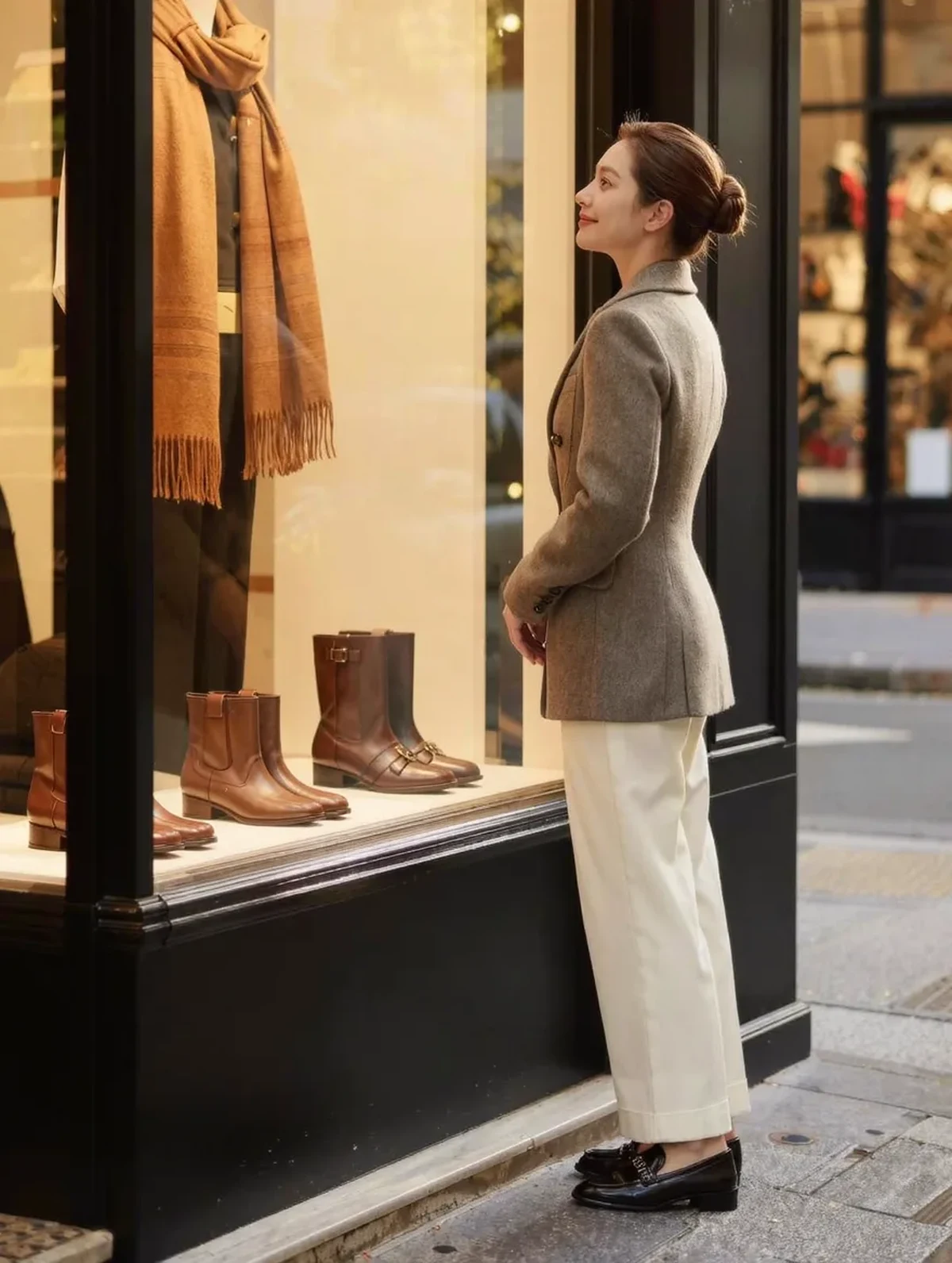
Run a finger along the top of your shoulder until it drops off the edge and the arm begins. That bony corner is where the seam belongs.
From the front, the seam should form a clean line straight down from the collar to that corner, then the sleeve should hang without interruption. From the side, the sleeve head — the curved top of the sleeve — should follow the round of your shoulder, not stand away from it.
Too wide and the seam sits out on the upper arm, where there is nothing underneath to support it. The result is a small collapse just below the seam, usually visible as a horizontal dent about three centimetres down the sleeve. Wide shoulders also add visual width exactly where most people do not want it, and they make an otherwise good coat look borrowed.
Too narrow and the seam pulls inward onto the shoulder itself, which creates diagonal drag lines from the shoulder toward the chest and restricts the arm. A narrow shoulder is more comfortable to spot because you feel it immediately when you reach forward.
And a deliberately dropped shoulder is a different thing entirely. Relaxed and oversized coats are designed with the seam well down the arm, and on those the seam should look intentional and symmetrical, with the sleeve still hanging cleanly. The flaw is not width itself — it is a structured shoulder that misses its mark.
Why can a tailor not simply take them in?
Because the shoulder is where the architecture of the garment lives.
A structured jacket shoulder contains several layers: the outer fabric, the canvas or interfacing that gives it shape, often a shoulder pad, and the sleeve head roll that supports the top of the sleeve. Narrowing the shoulder means detaching the sleeve, cutting into that structure, reshaping it, then setting the sleeve back in so that it hangs straight. Setting a sleeve is one of the genuinely difficult operations in tailoring, and doing it on a garment that was built around different measurements compounds the difficulty.
So the cost is high — frequently a large fraction of what an off-the-peg coat cost in the first place — and the result is unpredictable, because the fabric already has the shape of its original construction pressed into it.
There is one genuine exception: raglan sleeves. A raglan seam runs diagonally from the underarm to the neckline rather than sitting on the shoulder, so there is no shoulder seam to reposition and the fit is far more forgiving. This is one reason raglan coats work for a wider range of builds, and why they are worth trying when structured shoulders never seem to sit right.
Removing or thinning a shoulder pad is also usually possible, and on a lightly padded jacket that alone can bring a slightly wide shoulder into line. Ask about this before writing a garment off — it is cheap and reversible.
Myth vs Fact: Tailoring and Fit
Myth: A good tailor can fix anything. Fact: A good tailor can fix almost everything except shoulders, and a good tailor will tell you so. Sleeve length, body length, waist suppression, hems, trouser everything — all routine. Shoulders are the line where alteration becomes reconstruction.
Myth: Buy for the widest part of you and have the rest taken in. Fact: This works for the chest and waist, and fails for the shoulder. If you are between sizes, fit the shoulder and alter the body. A jacket one size up with correct shoulders can be made to look bespoke; a jacket with wrong shoulders cannot be made to look right at any price.
Myth: Shoulder pads are a sign of a cheap or dated garment. Fact: Almost every structured jacket has some shoulder support, including very expensive ones. The pad is what keeps the line clean over a sloping shoulder. What dates a garment is an exaggerated pad, not the presence of one.
Myth: If it feels comfortable, it fits. Fact: A shoulder that is too wide feels extremely comfortable, because nothing is touching you. Comfort is a poor test for shoulder fit and an excellent test for chest and back fit. Use the mirror for the shoulder and your arms for the rest.
Myth: You can judge shoulder fit with the coat unbuttoned in a fitting room. Fact: Fasten it, put your arms down, stand square, and look at the profile. An open coat hangs differently and hides both the dent of a wide shoulder and the drag of a narrow one.
How do you check it in the shop in thirty seconds?
Fasten the garment and stand square to the mirror with arms relaxed. Almost every shoulder fault is invisible with your arms raised or the coat open.
Find the seam with your fingertips. It should land on the bony corner. Off the corner and down the arm on a structured coat is a fail, however good the rest looks.
Look for a horizontal dent below the seam. That dent is the sleeve collapsing because nothing is holding it up. It is the single most reliable sign of an over-wide shoulder and it never improves with wear.
Turn to the side and check the sleeve head. It should curve smoothly out of the shoulder. A bubble or a ridge means the sleeve has more fabric than the shoulder can absorb.
Reach forward as if opening a door. Pulling across the upper back means the shoulder is too narrow, which matters more on a coat you will wear over a jumper all winter than on a blazer worn indoors.
Then step back three metres. At the distance people actually see you, a coat is a shoulder line, a length and a colour. If the shoulder line is wrong at that distance, nothing else you do to the coat will rescue it — and that is the one flaw worth putting the coat back on the rail for.
FAQ: Shoulder Fit Questions, Answered
What if the shoulders fit but the coat is huge everywhere else?
That is the good version of the problem. Taking in the side seams and the back, shortening sleeves and adjusting the hem are all standard alterations, and a competent tailor will quote on them without hesitation. Budget for it when comparing prices — a cheaper coat plus alterations often beats a more expensive one that fits nowhere.
Are shoulders different on coats and blazers?
Yes. A coat is cut with more room because it goes over other layers, so its shoulder sits slightly wider by design. Try coats on over what you will actually wear beneath them — a coat fitted over a T-shirt in September is a coat that binds over a knit in January.
What about knitwear and unstructured jackets?
The rules relax considerably. Soft, unstructured shoulders drape rather than hold a line, so a seam sitting slightly off the corner reads as intentional. Save the strict standard for anything with canvas, padding or a set-in sleeve that stands up on its own.
TL;DR:
- The shoulder seam belongs on the bony corner where your shoulder ends and your arm begins, lying flat with no dent or bubble.
- It is the one measurement a tailor genuinely cannot fix, because reshaping it means rebuilding the sleeve, canvas and collar.
- Between sizes, fit the shoulder and alter the body — never the other way round.
- Raglan sleeves and removable shoulder pads are the two real workarounds worth asking about before giving up on a coat.
Most fitting advice is a long list of things to check, which is why nobody uses it. Check one thing instead. If the shoulder lands where it should, the rest is a conversation with a tailor; if it does not, the coat was never going to be yours.
Keep Reading
This article is for general styling and informational purposes only. Trends, sizing, availability and pricing may vary by brand and season.