Trouser Break: The Half Inch That Decides If Classics Look Tailored
Quick Answer: Break is the small fold that forms where a trouser hem rests on the shoe. Classic trousers look most tailored with a slight break — roughly a half-inch of fabric touching the shoe, one soft horizontal ripple, nothing more. Too much break reads sloppy no matter how good the wool is; no break at all reads costume-y unless the trouser is deliberately cropped. It is the cheapest fix in your wardrobe and the one nobody does.
You have a pair of trousers that cost real money and still look faintly wrong. The fabric is beautiful. The waist sits where it should. Something at the bottom is undoing all of it.
It is almost always the break — and it is almost always half an inch away from being right.
What is trouser break, actually?
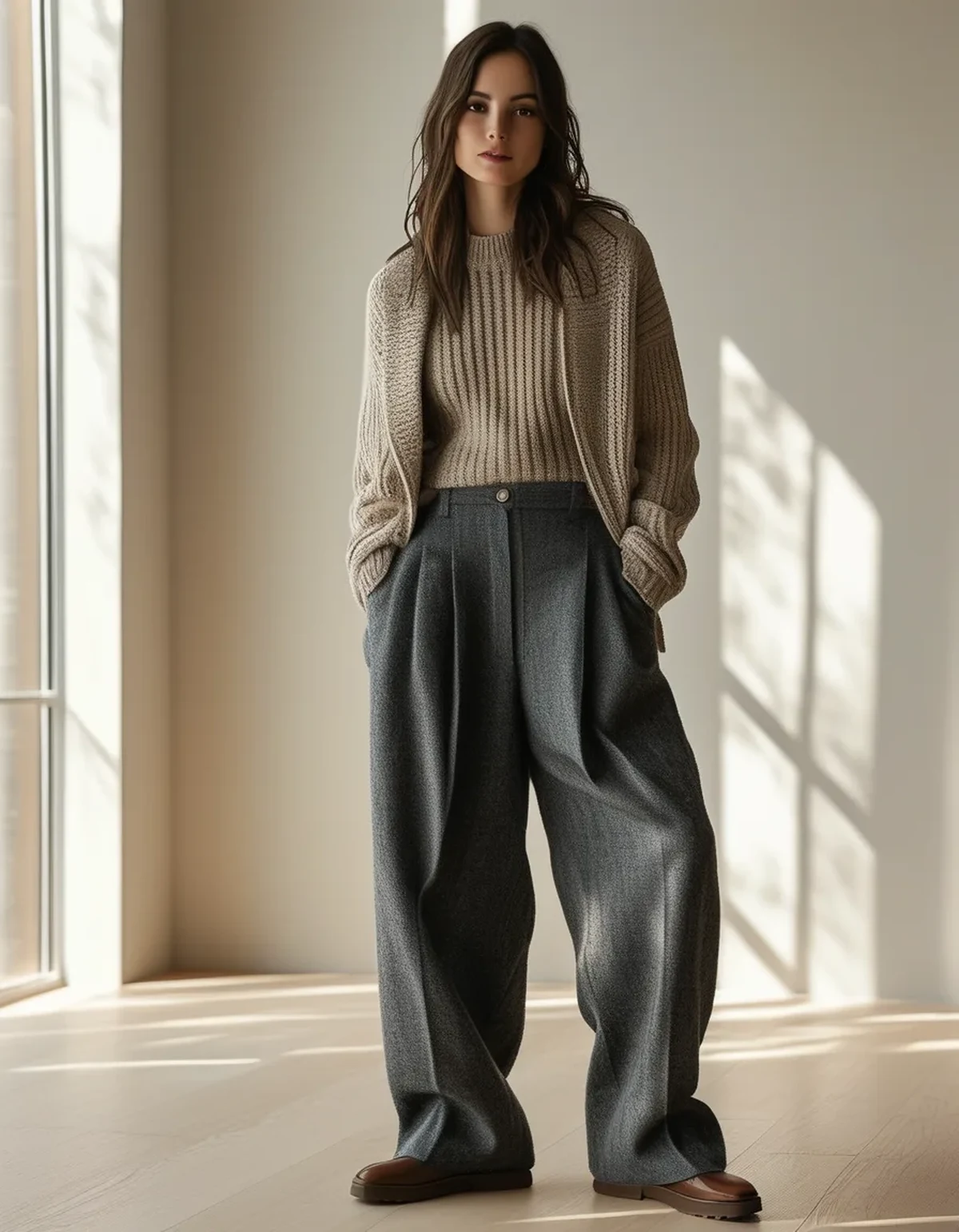
Break is what happens when a trouser leg is longer than the distance from your waist to the top of your shoe. The extra length has nowhere to go, so it folds. That fold is the break.
Designers describe it in four rough grades. No break: the hem stops at or above the shoe, showing a clean line and sometimes a sliver of sock. Slight break: the hem grazes the shoe and forms one soft dent across the front. Medium break: a clear horizontal fold, the hem sitting properly on the laces. Full break: the fabric stacks, sometimes twice, and pools at the ankle.
What matters is not which one you prefer in the abstract. It is that the break sets the last note of a vertical line your eye has been following since your shoulders. Everything above can be immaculate and the eye still finishes on a puddle.
Why does the same trouser break differently on different shoes?
Because break is not a property of the trouser. It is a measurement of the gap between the hem and the shoe, and the shoe keeps changing.
A loafer with a low vamp sits perhaps 2cm lower at the instep than an ankle boot. Put the same trousers over both and you go from a slight break to almost none. Add a block heel and the hem rises again. This is why the trousers you had hemmed for boots in February look strangely short in September when you move back to a flat.
The practical consequence is uncomfortable but simple: a hem is only correct for a shoe height, not for a person. Tailors know this, which is why a good one asks what you will wear them with before touching the scissors. If you never told them, they guessed — and the guess is why your favourite trousers only work on certain days.
The fix is not owning multiple hems of everything. It is deciding, per trouser, which shoe height it belongs to, and hemming for that. A wide wool trouser can be a boot trouser. A tapered one can be a flat trouser. Trying to make one pair serve both is how you end up with a hem that is wrong for everything by an equal amount.
How much break should classic trousers have?
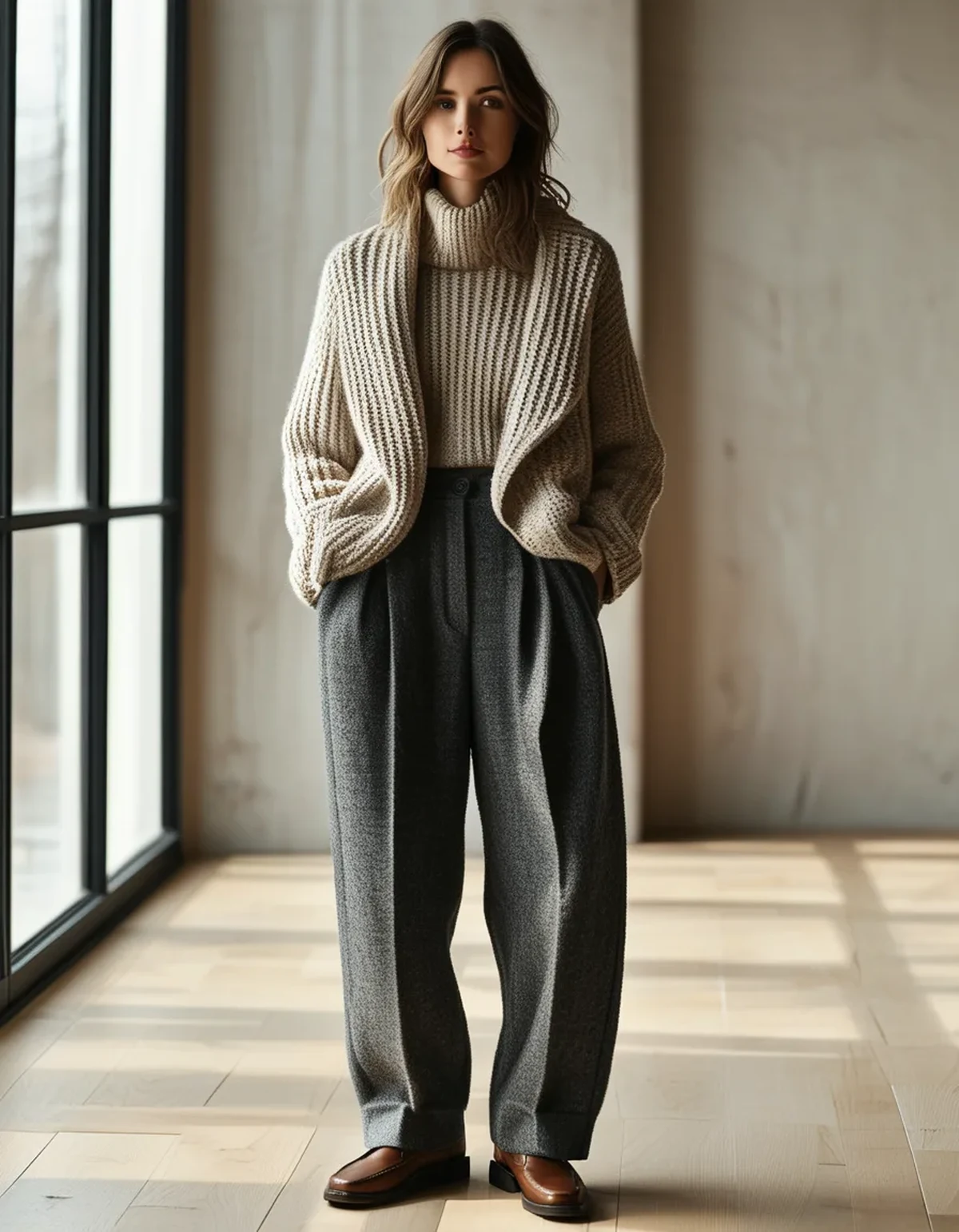
For anything classic — tailored wool, twill, a straight or wide leg meant to read grown-up — aim for slight break. In practice that means the front hem touches the top of the shoe and creates one soft ripple, about a half-inch of contact, with the back hem sitting roughly 1cm lower so it covers the shoe from behind.
That back-to-front angle matters more than people expect. A hem cut dead level looks fine standing still and rides up awkwardly the moment you walk. A slight slant — higher in front, lower at the back — is what keeps the line clean in motion.
Some useful adjustments:
- Wide leg: slightly more length, because the volume needs weight at the bottom to hang straight. A wide trouser with no break flaps.
- Tapered or slim: less. A narrow leg has no fabric to absorb a fold, so any break reads as a crumple rather than a drape.
- Cropped: commit properly. The hem should land at the narrowest part of the ankle or just above it, with clear daylight between fabric and shoe. A crop that ends near the shoe reads as an accident.
If you take one number away: half an inch of contact, front hem, on the shoe you actually wear with them.
Myth vs Fact: what people get wrong about hemming classics
Myth: A longer trouser is more formal. Fact: A longer trouser was more formal in 1948, when full break was the house style. Contemporary tailoring reads clean as formal. Stacked fabric now reads as a hem nobody bothered with.
Myth: No break is the modern, sharp choice. Fact: No break is a specific look that needs a narrow leg, a defined shoe, and a bit of nerve. On a wide classic trouser it looks like the pair shrank.
Myth: You should hem trousers barefoot so they work with everything. Fact: This produces a hem that is correct with nothing. Wear the shoes. If you own two heights you genuinely rotate, hem for the lower one and let the taller shoe show a fraction more sock.
Myth: Hemming ruins the original finish. Fact: Only if it is done badly. A tailor can reuse an original hem on most trousers, and a blind hem on wool is invisible from a metre away. The third point on this list is the one that quietly ruins the most trousers — hemming for no shoe at all is the default, and it is the reason so many good pairs sit unworn.
Myth: Cuffs need more break. Fact: Cuffs need less. The weight of a turn-up already pulls the leg straight, so a cuffed trouser with medium break stacks badly. Slight break, no more.
What do you do when you cannot re-hem?
Sometimes the trouser is borrowed, secondhand, or has a hem you do not want to cut into. There is more room to manoeuvre than most people think.
Raise the waist. Classic trousers are usually designed to sit at the natural waist and get worn 3cm too low. Pulling the waistband up to where it belongs removes exactly the length that was pooling at the ankle, and it improves the leg line at the same time. Try this before anything else — it is free and it solves the problem outright surprisingly often.
Change the shoe, not the trouser. If the break is too full, a shoe with more height at the instep — a boot, a loafer with a higher vamp, a block heel — takes up the slack. This is the fastest same-morning fix available.
Add a cuff yourself. A 4cm turn-up removes 8cm of length and looks intentional on wool and heavy cotton. Press it firmly and it holds all day. On very fluid fabrics it will drop, so this is a wool-and-twill trick only.
Iron-on hem tape is a genuine emergency option, not a solution. It stiffens the hem line and shows on anything with drape. Use it to get through a day, then go to a tailor. A hem costs about the price of two coffees and buys back a pair of trousers you had stopped wearing.
FAQ: Trouser Break Questions, Answered
Should trousers touch the ground at the back?
No. The back hem should sit low enough to cover the shoe but clear the floor by about 1cm when you are standing still. Anything longer and the hem edge frays within a season, which is a wear pattern that instantly ages a classic piece.
How do you check your own break without a fitting room?
Stand on a hard floor in the shoes, look straight down, then check a side profile in a mirror or a phone photo. You want to see one fold at the front, not two, and no fabric touching the floor behind. A photo is more honest than a mirror here — the mirror lets you unconsciously straighten up.
Does break work differently on wide-leg trousers?
Yes. Volume needs a little more length to hang straight, so wide-leg classics can carry a slightly deeper break than a tapered pair without looking untidy. The limit is the same though: one fold, never a stack.
Is it worth hemming inexpensive trousers?
Usually more worth it than hemming expensive ones. A well-cut hem on an affordable pair closes most of the visible gap between it and a costly pair, because the length of the line is what the eye reads first — not the fibre content.
TL;DR:
- Break is the fold where the hem meets the shoe, and it is the last thing your eye reads on a vertical line.
- Classic trousers want a slight break — about a half-inch of contact at the front, back hem roughly 1cm lower.
- A hem is correct for a shoe height, not a person. Decide which shoe each pair belongs to before hemming.
- Wide legs take slightly more length, tapered and cuffed pairs take less, crops should show clear daylight.
- No tailor today? Pull the waistband up to your natural waist first — it removes the excess length for free.
Nothing in a classic wardrobe rewards half an inch of attention the way a hem does. It is the difference between a trouser that looks bought and one that looks chosen.
Keep Reading
This article is for general styling and informational purposes only. Trends, sizing, availability and pricing may vary by brand and season.