Why Wool Trousers Bag at the Knee by Lunchtime (and How to Stop It)
Quick Answer: Trousers bag at the knee when the fabric is stretched every time you sit and cannot spring back. Loosely woven or low-twist wool, a blend with too little wool, and a fit that is tight across the thigh make it worse. A tighter-woven worsted wool, a little room through the leg, and a night hanging by the hem let the fibres recover so the knee sits flat again by morning.
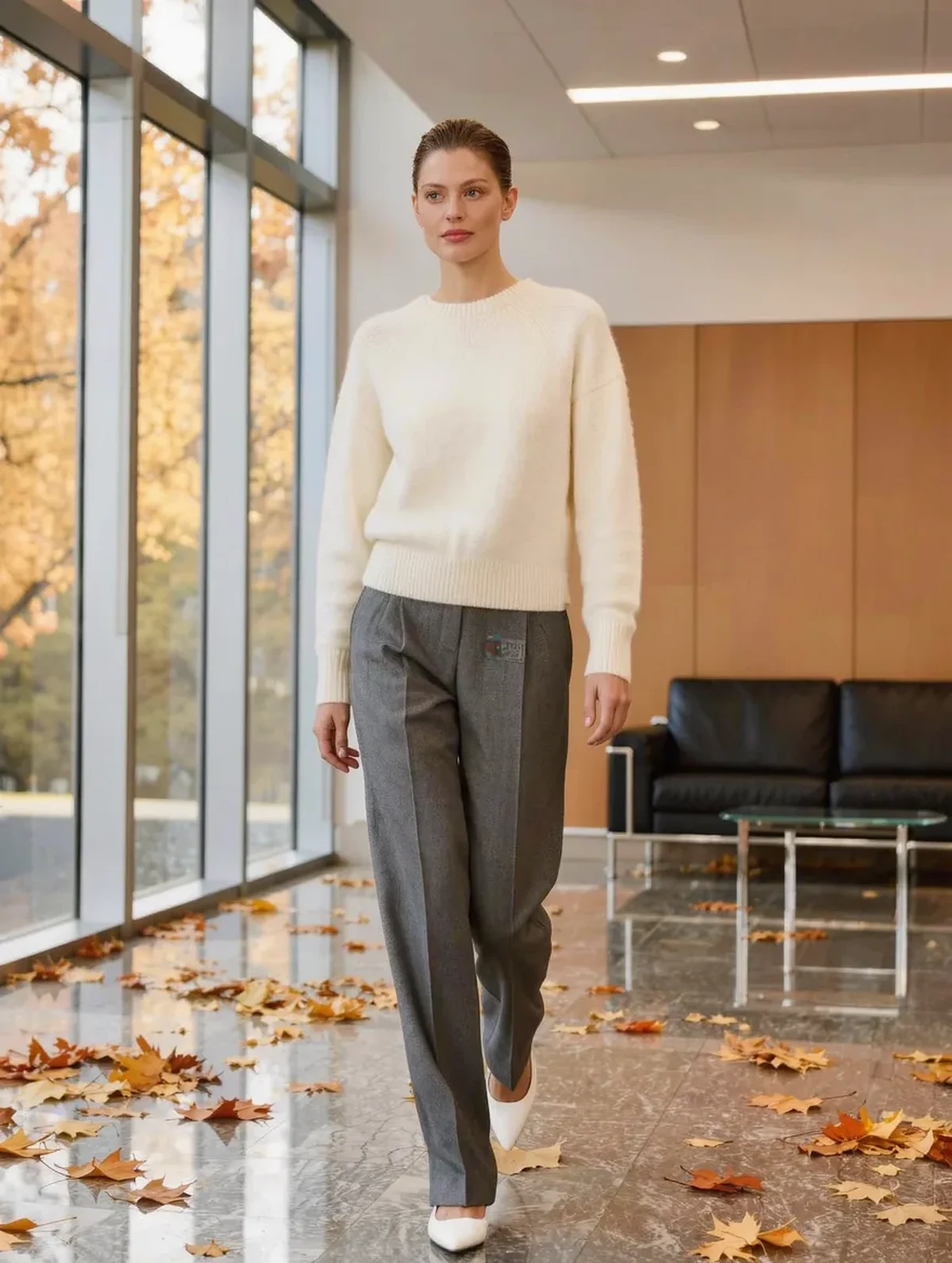
At nine in the morning the trousers look perfect: long, clean and pressed. By lunch, two small pouches have appeared at the knees, and in the lift mirror you look as if you have been kneeling in a garden. Nothing ages a classic outfit faster, and it is not a sign the trousers are cheap. It is a sign the fabric and the fit are working against each other.
What actually causes knee bagging?
Every time you sit, the fabric over your knee stretches by roughly 15 to 20 percent to make room for the bent joint. That is a lot of strain concentrated in a small patch of cloth.
Good wool is naturally elastic, so the fibres are stretched and then slowly return. The problem is recovery time. If you sit for an hour, stand for five minutes, then sit again, the fibres never fully relax, and the stretched shape begins to hold. Warmth and a little moisture from your body make wool more pliable, which is exactly why the bag forms faster on a heated day indoors.
So knee bagging is not a single event. It is an accumulation of small stretches the fabric had no chance to recover from, which is also why the same trousers look fine after a day of walking and tired after a day at a desk.
Which fabrics bag the least?
Worsted wool with a tight weave is the champion. Worsted yarn is combed so the fibres lie parallel and are tightly twisted, which gives a smooth, dense cloth that snaps back well. A gabardine or tropical worsted in the 250 to 300 gram range is the classic autumn choice for exactly this reason.
Loosely woven flannel and soft woollen cloths bag more. They are warm and beautiful, but the open, fuzzy structure stretches easily. They are still worth owning; they just need more rest between wears.
Blends are a mixed story. A small amount of elastane, around 2 to 3 percent, actually helps recovery. Polyester in larger amounts resists wrinkles but, once stretched and warmed, can set a bag that wool would have recovered from. Look for at least 70 percent wool if you want trousers that keep their line through a desk day.
5 Mistakes That Make Trousers Bag Faster
1. Buying them tight through the thigh. A snug thigh pulls the fabric over the knee tighter every time you sit. A little ease — enough to pinch an inch of cloth at mid-thigh — dramatically reduces strain.
2. Wearing the same pair two days running. Wool needs about 24 hours to recover fully. Rotating two pairs is the single cheapest way to make both last longer and look better.
3. Folding them over a chair at night. Folded, the stretched knee stays stretched. Hanging by the hem lets gravity pull the leg straight and helps the fibres relax.
4. Pressing too often with a hot dry iron. Excess heat flattens and weakens wool over time. A steamer or an iron with a pressing cloth is gentler and far better at relaxing a bag.
5. Sending them to the dry cleaner every week. Frequent cleaning strips the fibre and shortens the cloth’s life. The third mistake on this list does more damage than all the dry cleaning in the world, and it is the easiest to fix.
How do you get a bagged knee to sit flat again?
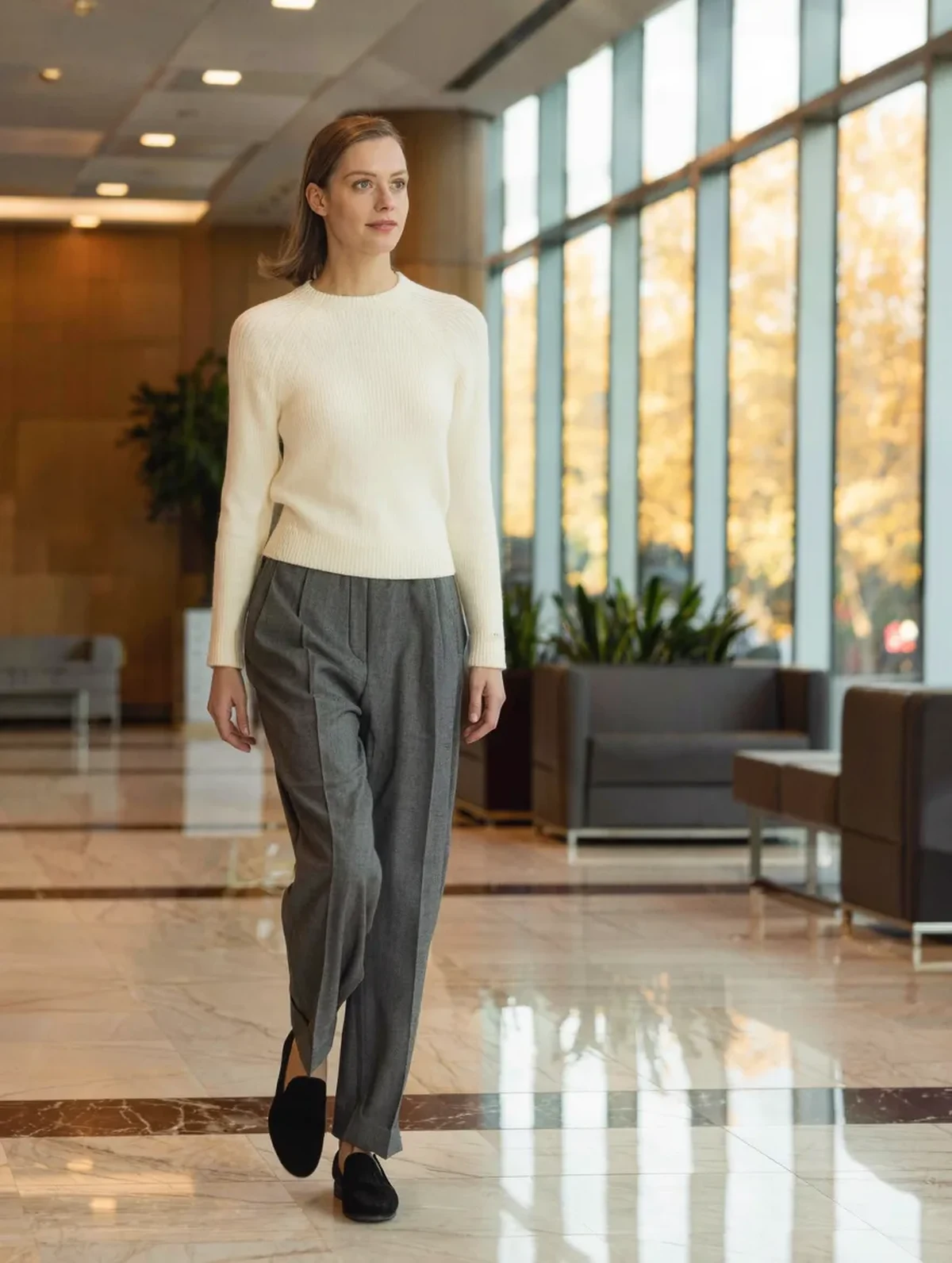
Hang the trousers by the hem overnight using a clip hanger. The weight of the waistband does quiet work, drawing the leg straight while the fibres relax.
Steam the knee lightly. Hold a steamer or a steaming iron a few centimetres away for about ten seconds, then smooth the area flat with your palm and let it cool completely before wearing. Wool sets its shape as it cools, so that cooling step is where the fix actually happens.
For a stubborn bag, use a damp pressing cloth. Lay a clean damp cotton cloth over the knee and press gently, lifting and lowering rather than sliding the iron. Keep the crease line aligned as you go so you do not create a second one.
Brush them. A soft clothes brush lifts the nap and removes the dust that makes a worn patch look shiny and tired. Thirty seconds after each wear keeps a classic pair looking new for years.
What should you look for when buying classic trousers?
Feel the cloth and scrunch it. Grip a handful at the knee area for five seconds and let go. Good worsted springs back almost immediately; cloth that stays crumpled will bag on you too.
Check the fit seated, not just standing. Sit down in the fitting room for a full minute. If the fabric pulls tight across the thigh or the knee, go up a size and have the waist taken in — a tailor can fix a waist in minutes, but no one can add room to a thigh.
Look for a half lining to the knee. Many well-made wool trousers have a lining at the front to just below the knee. It reduces friction and supports the cloth exactly where the strain happens, and it is one of the quiet signs of a classic pair made to last.
FAQ: Wool Trouser Questions, Answered
Do more expensive trousers bag less?
Often, but price is not the reason. A tightly woven worsted and a thoughtful cut are what matter, and some mid-priced trousers beat expensive loose-woven ones. Judge the cloth and the fit, not the label.
Can a tailor fix trousers that always bag?
A tailor can let out the thigh if there is seam allowance, which often solves the problem. They cannot change the weave, so a loosely woven pair will always need more rest between wears.
Is it better to wash or dry clean wool trousers?
Dry clean only when they are genuinely dirty, perhaps a few times a season. Between cleans, brushing, airing and steaming keep them fresh and help them recover their shape.
TL;DR:
- Knee bagging is the fabric stretching each time you sit and not recovering between sits.
- Tightly woven worsted wool of at least 70 percent wool bags the least; loose flannel bags the most.
- Buy a little room through the thigh, rotate two pairs, and give wool 24 hours of rest.
- Hang by the hem, steam lightly and let it cool to set the knee flat again.
Treat good trousers like a pair of good shoes — rest and rotation — and they will keep that clean classic line all autumn long.
Keep Reading
This article is for general styling and informational purposes only. Trends, sizing, availability and pricing may vary by brand and season.