Why Your First Autumn Coat Looks Wrong With the Shoes You Still Have On
Quick Answer: A coat sets a weight, a formality, and a season, and the shoes have to agree with all three. The most common early-autumn error is a structured coat over summer shoes - a trench with flat sandals, a wool coat with a mesh trainer. The mismatch is not about colour. It is that the coat reads as substantial and the shoe reads as light, and the eye registers the contradiction before it registers anything else. The fix is to match the visual weight of the shoe to the coat, and only then worry about tone.
Here is how the pairing actually works.

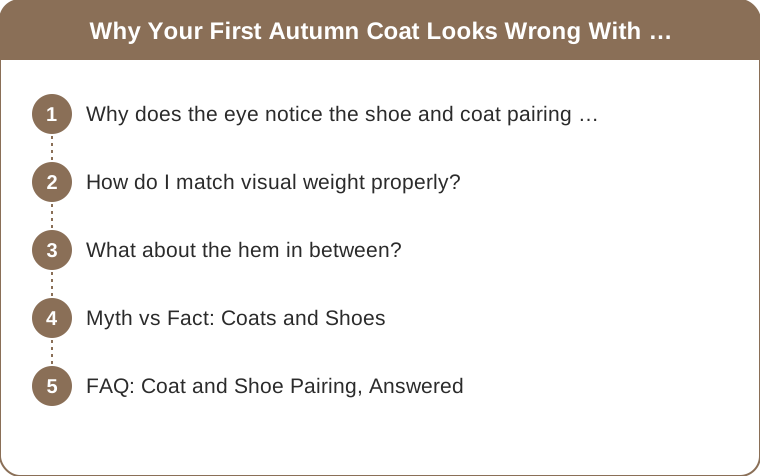
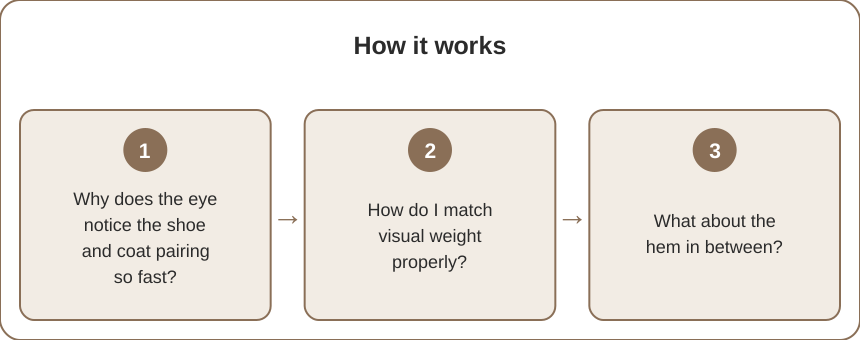
Why does the eye notice the shoe and coat pairing so fast?
Because a coat covers everything else. With a coat on, the outfit visible to a stranger is a coat, a hem, and a pair of shoes - and with two of the three variables removed, the remaining relationship carries all the weight.
Coats also set expectations very precisely. A trench says a particular thing about formality; a wool overcoat, a puffer, and a leather jacket each say something different, and the shoe is where that claim gets confirmed or contradicted.
Visual weight is what is being compared, not colour. A dense, structured coat over a thin-soled delicate sandal looks unbalanced even when both are beige - the outfit reads as top-heavy.
Season is embedded in the materials. Open-toe, mesh, canvas, and raffia all say summer regardless of the coat, and a summer material below an autumn material reads as unfinished rather than as clever contrast.
And the hem sits between them as a third variable. A long coat with a shorter hem underneath produces a large gap of bare leg above the shoe, which amplifies whatever mismatch already existed.
How do I match visual weight properly?
Rank the coat first, then find a shoe in the same tier. A rough three-tier scale is enough: light (unlined trench, light cotton jacket), medium (wool blend coat, leather jacket, blazer), heavy (heavy wool overcoat, shearling, substantial puffer).
Light coats take almost any shoe with a closed toe. A loafer, ballet flat, low boot, or a leather trainer all sit comfortably under a trench, which is why it is the most versatile coat anyone owns.
Medium coats want a shoe with a visible sole. A loafer with a defined sole, an ankle boot, or a chunky trainer balances a wool blend; a fine ballet flat starts to look thin underneath it.
Heavy coats need substantial shoes and nothing less. A thin sole under a heavy overcoat reads as unbalanced no matter how elegant the shoe, because the mass above needs something to stand on.
The failure runs both ways. A heavy lug-sole boot under a fine unlined trench looks bottom-heavy, which is a less common but equally real mistake - and one that has become more frequent as chunky soles have grown.

What about the hem in between?
The hem decides how much attention the shoe gets. A long coat with a long hem underneath shows almost no leg, so the shoe is a small punctuation mark and can be simpler than you would expect.
A coat longer than the hem underneath creates the most difficult version. You get coat, then a gap of bare leg, then a shoe - three distinct blocks, and the eye reads the gap as a mistake unless it is clearly deliberate.
The clean fixes are opposite ends. Either bring the hem below the coat so the layering is visible and intentional, or shorten the visible leg with a boot that raises the shoe line up towards the hem.
Tonal continuity closes the gap. Tights, shoe, and hem in a similar depth of tone merge the three blocks into a single line, which is why an all-black lower half works under almost any coat.
And when in doubt, longer. In early autumn, a hem that sits at or just past the coat hem is close to universally flattering and removes the problem before it starts.
Myth vs Fact: Coats and Shoes
Myth: The shoes should match the bag. Fact: An outdated rule. The shoes should match the coat’s weight; the bag is comparatively free, because it does not sit in the same vertical line.
Myth: Neutral shoes go with any coat. Fact: A neutral summer sandal under a wool coat is still wrong, because the problem is material and weight, not colour.
Myth: A trench is formal and needs a formal shoe. Fact: A trench is the most tolerant coat in the wardrobe - it takes trainers, loafers, boots, and heels, which is exactly why it endures.
Myth: Chunky boots go with everything now. Fact: They overpower fine, unlined coats. A lug sole under a light trench reads as bottom-heavy, however current the shoe.
Myth: You can hide a mismatch with a long coat. Fact: A long coat removes everything else from view, which makes the shoe more visible rather than less.
Myth: The shoes are the last decision. Fact: In coat season they are effectively the second decision, right after the coat. Everything in between is barely visible.
FAQ: Coat and Shoe Pairing, Answered
What shoes work with a beige trench?
Most closed-toe shoes: loafers, ballet flats, ankle boots, leather trainers, low heels. A trench is a light coat and does not demand a heavy shoe, which is why it is the most flexible piece of outerwear you can own.
Can I wear trainers with a wool coat?
Yes, with a leather trainer that has a defined sole. A mesh running shoe is too light and too obviously summer to sit under a wool coat.
Are sandals ever okay under a coat?
Rarely, and only under the lightest unlined coats on a genuinely warm day. The material contradiction is what reads as wrong, not the temperature.
How do I handle a coat that is longer than my dress?
Either lengthen the hem to below the coat so the layering is deliberate, or raise the shoe line with a boot. A tonal lower half - tights and shoes in one depth of tone - also closes the gap.
Do my shoes and bag still need to match?
No. Match the shoes to the coat’s weight instead. The bag hangs outside that vertical line and has far more freedom.
What is the safest shoe for early autumn coats?
A leather loafer with a defined sole. It sits comfortably under light and medium coats, works with trousers and midi hems, and never reads as the wrong season.
TL;DR:
- With a coat on, the outfit a stranger sees is coat, hem, shoe - so that relationship carries everything.
- Match visual weight, not colour. Rank the coat light / medium / heavy and pick a shoe in the same tier.
- Thin soles under heavy coats look unbalanced; lug soles under fine trenches look bottom-heavy. It fails both ways.
- Summer materials - open toe, mesh, canvas, raffia - contradict any autumn coat regardless of tone.
- A coat longer than the hem creates a bare-leg gap. Lengthen the hem, raise the shoe line, or go tonal.
- The trench is the most tolerant coat you own. It takes almost any closed shoe.
In coat season, shoes are the second decision, not the last.
Keep Reading
This article is for general styling and informational purposes only. Trends, sizing, availability and pricing may vary by brand and season.